- English
- French
- German
- Portuguese
- Spanish
- Russian
- Japanese
- Korean
- Arabic
- Greek
- German
- Turkish
- Italian
- Danish
- Romanian
- Indonesian
- Czech
- Afrikaans
- Swedish
- Polish
- Basque
- Catalan
- Esperanto
- Hindi
- Lao
- Albanian
- Amharic
- Armenian
- Azerbaijani
- Belarusian
- Bengali
- Bosnian
- Bulgarian
- Cebuano
- Chichewa
- Corsican
- Croatian
- Dutch
- Estonian
- Filipino
- Finnish
- Frisian
- Galician
- Georgian
- Gujarati
- Haitian
- Hausa
- Hawaiian
- Hebrew
- Hmong
- Hungarian
- Icelandic
- Igbo
- Javanese
- Kannada
- Kazakh
- Khmer
- Kurdish
- Kyrgyz
- Latin
- Latvian
- Lithuanian
- Luxembou..
- Macedonian
- Malagasy
- Malay
- Malayalam
- Maltese
- Maori
- Marathi
- Mongolian
- Burmese
- Nepali
- Norwegian
- Pashto
- Persian
- Punjabi
- Serbian
- Sesotho
- Sinhala
- Slovak
- Slovenian
- Somali
- Samoan
- Scots Gaelic
- Shona
- Sindhi
- Sundanese
- Swahili
- Tajik
- Tamil
- Telugu
- Thai
- Ukrainian
- Urdu
- Uzbek
- Vietnamese
- Welsh
- Xhosa
- Yiddish
- Yoruba
- Zulu
What Standards Govern High Purity Niobium Wire?
A few worldwide measures, such as ASTM B392, ISO 3089, and AMS determinations, set strict rules for the chemical makeup, mechanical capabilities, and surface quality of high purity niobium wire. These rules make beyond any doubt that niobium wire is as unadulterated as it needs to be for superconducting applications, electrical parts, and space frameworks. Following these rules makes it beyond any doubt that materials can be followed, that they work the same way each time, and that quality is kept up for vital commercial applications around the world.
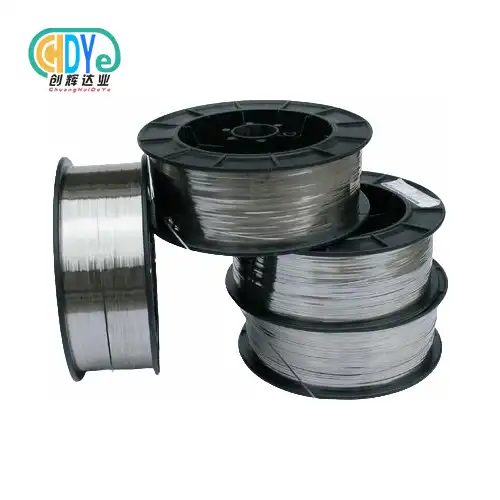
Understanding High Purity Niobium Wire and Its Industry Standards
An uncommon kind of fabric called tall immaculateness niobium wire has a chemical make-up that makes it suitable for the aviation, hardware, and superconducting businesses. Its immaculateness levels are more often than not higher than 99.9%, it has a tall mechanical quality that remains steady at high temperatures, and it has a special immaculateness level. Accurate fabrication strategies that keep tight resistances on measurements and surface judgment are utilized to draw the wire from high-quality niobium poles.
Essential Properties That Define Quality Standards
High purity niobium wire is unique because it has a melting point of 2,477°C, a high electrical conductivity of 6.7×10⁶ siemens per meter, and amazing superconducting qualities at very low temperatures. Niobium wire is needed for many things, from MRI machines to particle reactors, because it is consistent and pure, which has a direct effect on performance.
International Standards Framework
Several foreign groups have come up with detailed rules for making and checking the quality of niobium wire. The International Organization for Standardization (ISO) keeps up with ISO 3089 standards, and the American Society for Testing and Materials (ASTM) gives detailed specifications in ASTM B392. Along with these foreign frameworks, there are also European standards (EN) and national specifications, such as Japanese Industrial Standards (JIS) and Chinese National Standards (GB).
Understanding these standards is important for procurement workers and engineers who work on projects all over the world and need to make sure that materials meet the standards and work at their best. Each standard covers a different part of production, testing, and quality control that, when put together, make sure that the materials are reliable.
Key Quality and Purity Specifications for High Purity Niobium Wire
Specifications for niobium wire's quality include strict rules about chemical purity, exact mechanical properties, and strict rules about the surface finish. Chemical purity standards usually limit impurities to parts per million (ppm) levels. These standards pay special attention to oxygen, nitrogen, carbon, and metallic impurities that can have a big effect on the superconducting qualities.
Chemical Composition and Impurity Limits
Unalloyed reactor-grade niobium (UNS R04200) needs less than 150 parts per million of oxygen, 100 parts per million of nitrogen, and 100 parts per million of carbon. It is possible for commercial-grade versions (UNS R04210) to have slightly higher impurity levels while still performing well enough for most industrial uses. These requirements make sure that the material behaves the same way in all production batches.
Mechanical Properties and Testing Protocols
For annealed wire, the tensile strength needs to be between 200 and 400 MPa, and the elongation value needs to be more than 25% to make sure it can be bent easily during making operations. Electrical conductivity tests show that the material is pure, and surface finish tolerances keep the dimensions accurate, which is very important for precision uses.
Certification and Verification Processes
Inductively Coupled Plasma (ICP) spectroscopy and X-Ray Fluorescence (XRF) analysis are used in standard testing procedures to check the chemical makeup. These analytical methods can accurately find impurities at ppm levels, which lets sellers prove that their products meet international standards. As part of the documentation needs, there must be material test results, chemical analysis certificates, and dimensional inspection records that can be fully tracked.
Comparing Standards: Niobium Wire versus Other Refractory Metals
High purity niobium wire standards are very different from those for other refractory metals like tantalum and titanium. These standards are especially different when it comes to purity requirements and mechanical qualities. Titanium standards focus on strength-to-weight ratios and corrosion resistance. Niobium standards focus on superconducting properties and ultra-high purity levels that are needed for electrical uses.
Superconducting Grade vs. Industrial Grade Classifications
To keep the superconducting critical temperature and current density, superconducting-grade niobium wire needs to be purer than 99.99% and have very little intermediate element content. Industrial-grade versions allow higher amounts of impurities while still having good enough mechanical properties for structural uses. This difference has a direct effect on procurement choices and the suitability of applications.
Pure Niobium vs. Niobium Alloy Standards
Niobium alloy standards, like niobium-1% zirconium (UNS R04251/R04261), are very different from standards for pure niobium wire (UNS R04200/R04210). Alloy standards allow for more elements while still meeting certain property requirements. This lets sourcing professionals choose materials based on exact application needs and performance standards.
Procurement Considerations: How Standards Impact Sourcing Decisions
Industry standards have a big impact on how niobium wire is bought, especially when it comes to minimum order amounts and requirements for custom specifications. Standards-compliant suppliers usually keep more inventory and more production tools on hand to meet the needs of a wide range of customers and make sure they always offer high-quality goods.
Aligning Orders with Supplier Capabilities
To do effective buying, you need to know how the skills of suppliers match up with certain standard requirements. Manufacturers who are ISO 9001:2015 certified show that they follow the rules for quality management systems. Other certifications, like AS9100, show that they are qualified for the aerospace business. With these certifications, procurement workers can be sure that the supplier will be reliable and that the product will be the same every time.
Risk Mitigation Through Verification
As part of the supplier verification process, the production facilities, testing skills, and quality control systems should be looked at. Advanced melting equipment, electron beam furnaces, and full-service testing labs show that the provider can keep up with standards. Reviewing the supplier's paperwork, such as old test results and customer references, is another way to make sure they are trustworthy.
People who work in procurement can benefit from building long-term relationships with certified suppliers who consistently meet standards and offer technical help. This method lowers the risks in the supply chain and makes sure that important applications can always get the materials they need.
Navigating Delivery and Pricing Within the Framework of Industry Standards
Standards compliance has a direct effect on both the prices and delivery times of buying niobium wire. Tough testing requirements, certification processes, and quality assurance procedures make production schedules more difficult, but they make sure that materials are reliable and work consistently.
Cost Implications of Standards Compliance
The higher price of niobium wire that meets international standards is due to the extra costs of testing, licensing, and quality control needed to meet those standards. These costs cover things like chemical analysis, mechanical testing, checking the dimensions, and making the paperwork that makes sure the quality of the material and its tracking.
Production Lead Times and Quality Assurance
When comprehensive quality assurance methods are used to make sure standards are met, manufacturing lead times get longer. Testing protocols, getting ready for certification, and inspection processes take more time but ensure that the material works well and is reliable. Knowing these dates helps you plan projects and keep track of your goods better.
When shipping things internationally, you need to make sure you use the right packaging, paperwork, and handling techniques to keep the items' integrity during travel. Specialized packing protects the quality of the wire's surface, and the right paperwork makes sure that it gets through customs and can be tracked all the way through the supply chain.
Company Introduction and Comprehensive Niobium Wire Solutions
Shaanxi Chuanghui Daye Metal Material Co., Ltd. has been making and selling niobium wire for more than 30 years and has a lot of experience with rare metals. Because our company is in the Baoji High-tech Development Zone, which is also known as China's "Titanium Capital," we have access to great transportation and established industry networks that make global distribution easy.
International Certifications and Quality Assurance
Our ISO 9001:2015 Quality Management System Certification shows that we are dedicated to maintaining quality throughout all stages of production. Electron beam furnaces, precision rolling tools, and full testing labs that can keep up with ASTM, AMS, ISO, and GB standards are all part of advanced manufacturing facilities.
Product Portfolio and Custom Capabilities
We make high purity niobium wire in several different UNS grades, such as R04200 reactor grade, R04210 industrial grade unalloyed niobium, and niobium-zirconium alloy types. Different diameters, lengths, and special packaging needs can be met with custom specs, as long as strict quality standards and certification requirements are met.
Our expert consulting services help customers choose the right materials, make the best use of them, and make sure the quality is right. Expert metallurgists help with standard interpretation, specification creation, and performance optimization to make sure projects are completed successfully. Technical help, clearer paperwork, and ongoing supply chain management are all parts of after-sales support.
Conclusion
Standards for niobium wire set important guidelines for making sure that materials are of good quality and that they always work the same way in the electronics, military, and superconducting industries. International standards, like ASTM, ISO, and national ones, give detailed instructions on things like chemical makeup, mechanical qualities, and how to test them. By knowing these standards, procurement workers can make smart decisions about where to source things while still making sure they meet project requirements. Supplier partnerships that work well with certified manufacturers make sure that you can get compliant products, lower the risks of purchasing them, and keep the supply chain reliable for important uses.
FAQ
Q: What purity levels define high purity niobium wire?
A: High purity niobium wire typically contains 99.9% or higher niobium content, with reactor-grade specifications requiring 99.95% minimum purity. Impurity levels are measured in parts per million, with strict limits on oxygen, nitrogen, carbon, and metallic contaminants that could affect superconducting or electronic properties.
Q: How can buyers verify supplier compliance with international standards?
A: Verification requires reviewing supplier certifications, testing capabilities, and quality management systems. ISO 9001:2015 certification indicates quality system compliance, while material test reports, chemical analysis certificates, and dimensional inspection records demonstrate standard adherence. Facility audits provide additional verification of production capabilities.
Q: What distinguishes ASTM from ISO requirements for niobium wire?
A: ASTM B392 focuses on American aerospace and defense applications with specific mechanical property requirements, while ISO 3089 provides international standards emphasizing chemical composition and testing methods. Both standards ensure quality but may differ in specific testing protocols and acceptance criteria for particular applications.
Q: Which grades of niobium wire are available for different applications?
A: UNS R04200 reactor grade serves superconducting and electronic applications requiring maximum purity, while UNS R04210 commercial grade suits general industrial uses. Niobium-zirconium alloys (UNS R04251/R04261) offer enhanced mechanical properties for structural applications while maintaining corrosion resistance.
Partner with Chuanghui Daye for Certified High Purity Niobium Wire Supply
Shaanxi Chuanghui Daye combines three decades of rare metal expertise with state-of-the-art manufacturing facilities to deliver standards-compliant niobium wire solutions. Our ISO 9001:2015 certification and comprehensive testing capabilities ensure ASTM, ISO, and GB standard compliance for every shipment. Contact our technical team at info@chdymetal.com to discuss your requirements and receive customized quotations from a trusted high purity niobium wire supplier. Experience reliable quality, competitive pricing, and expert technical support that streamlines your procurement process while guaranteeing material performance.
References
1. American Society for Testing and Materials. "Standard Specification for Niobium and Niobium Alloy Strip, Sheet, and Plate." ASTM B393-20, 2020.
2. International Organization for Standardization. "Niobium - Chemical analysis by inductively coupled plasma atomic emission spectrometry." ISO 3089:2018.
3. Aerospace Material Specification. "Niobium Alloy Sheet, Strip, and Plate." AMS 7848C, Society of Automotive Engineers, 2019.
4. Chinese National Standards Administration. "Niobium and niobium alloys - Chemical analysis methods." GB/T 4698.1-2017.
5. Japanese Industrial Standards Committee. "Niobium and niobium alloys - Specifications." JIS H4551:2015.
6. European Committee for Standardization. "Non-ferrous metals - Niobium and niobium alloys - Part 1: Ingots and castings." EN 12560-1:2017.
Learn about our latest products and discounts through SMS or email