- English
- French
- German
- Portuguese
- Spanish
- Russian
- Japanese
- Korean
- Arabic
- Greek
- German
- Turkish
- Italian
- Danish
- Romanian
- Indonesian
- Czech
- Afrikaans
- Swedish
- Polish
- Basque
- Catalan
- Esperanto
- Hindi
- Lao
- Albanian
- Amharic
- Armenian
- Azerbaijani
- Belarusian
- Bengali
- Bosnian
- Bulgarian
- Cebuano
- Chichewa
- Corsican
- Croatian
- Dutch
- Estonian
- Filipino
- Finnish
- Frisian
- Galician
- Georgian
- Gujarati
- Haitian
- Hausa
- Hawaiian
- Hebrew
- Hmong
- Hungarian
- Icelandic
- Igbo
- Javanese
- Kannada
- Kazakh
- Khmer
- Kurdish
- Kyrgyz
- Latin
- Latvian
- Lithuanian
- Luxembou..
- Macedonian
- Malagasy
- Malay
- Malayalam
- Maltese
- Maori
- Marathi
- Mongolian
- Burmese
- Nepali
- Norwegian
- Pashto
- Persian
- Punjabi
- Serbian
- Sesotho
- Sinhala
- Slovak
- Slovenian
- Somali
- Samoan
- Scots Gaelic
- Shona
- Sindhi
- Sundanese
- Swahili
- Tajik
- Tamil
- Telugu
- Thai
- Ukrainian
- Urdu
- Uzbek
- Vietnamese
- Welsh
- Xhosa
- Yiddish
- Yoruba
- Zulu
Custom Tantalum Niobium Alloy Wire – Order to Spec
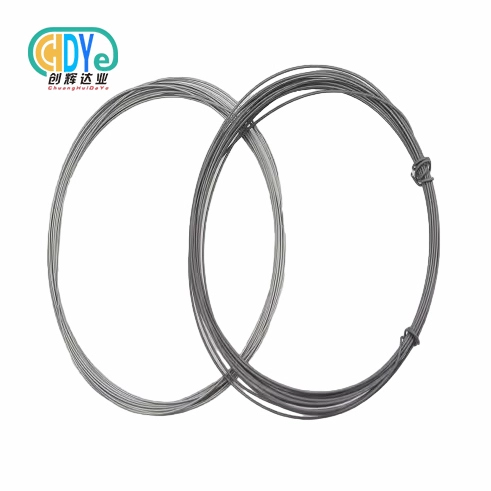
Customized tantalum niobium alloy wire is a vital fabric alternative for areas that require performing at their best in harsh conditions. This uncommon R05240 (Ta-40Nb) wire is made up of 60% tantalum and 40% niobium. It has awesome resistance to erosion, soundness at high temperatures, and fabulous electrical conductivity. These custom wires meet strict ASTM B 365 benchmarks and come in correct breadths from 0.3mm to 3mm. Their virtue levels reach 99.95%, and they are utilized in aviation, hardware, chemical preparation, and therapeutic settings where standard materials do not work.
Understanding Tantalum Niobium Alloy Wire: Properties and Production
The unique composition of tantalum niobium alloy wire makes it stand out by using the qualities of both metals to their fullest. The R05240 (Ta-40Nb) standard calls for exactly 60% tantalum and 40% niobium. This makes an alloy that works better in many situations than either pure tantalum or niobium. In harsh chemical environments, like hydrochloric acid, sulfuric acid, and nitric acid solutions, this mixture gives great corrosion resistance.
Exceptional Material Properties
The process of making the alloy uses complex vacuum consumable furnace melting methods that make sure the alloy's makeup is the same all over. This process makes a material that is very stable at high temperatures and keeps its shape at temperatures above 2000°C. Engineers can choose exact sizes for their uses because the wire drawing process lets them control the diameter to within 0.3 mm of a millimeter.
Quality controls during production make sure that these lines always have the same level of electrical conductivity. This makes them perfect for use with electronic parts and capacitors. The Ta-40Nb alloy can be worked with in cold conditions, which lets it be formed in complicated ways without damaging the structure. This edge in formability means that manufacturers who need custom wire configurations can make their products more cheaply.
Production Excellence Standards
Quality assurance protocols make sure that every wire meets the standards of ASTM B 365 certification and ISO 9001:2015 certification. Electron beam furnace technology is used in the production process to achieve higher levels of purity. Depending on the needs of the application, 99.9% or 99.95% purity grades are possible. Advanced inspection methods check the accuracy of the dimensions, the finish on the surface, and the consistency of the chemical makeup.
Evaluating Material Choices: Tantalum Niobium Alloy Wire vs Alternatives
When choosing a material, people often weigh tantalum niobium alloy wire against more common choices, such as pure tantalum, titanium alloys, or stainless steel. It is much more cost-effective to use the Ta-40Nb composition, and it still has great performance qualities. Adding niobium lowers the cost of materials without changing their important qualities, unlike pure tantalum, which can be too expensive for large-scale uses.
Performance Comparison Analysis
Testing for chemical resistance shows that tantalum niobium wire stays very resistant to corrosion in places where stainless steel fails totally. The alloy works better in solutions that contain chloride, which makes it perfect for tools used in chemical processing. Temperature cycling tests show that it expands less than titanium options, which means it will stay the same size in high-temperature situations.
Comparing Ta-40Nb wire's mechanical properties shows that it keeps its tensile strength better at high temperatures than many other common materials. Electrical conductivity stays the same over a wide range of temperatures, which is a big plus for computer users. Because of these performance traits, the alloy is very useful in aerospace applications that need to be reliable in harsh conditions.
Procurement Insights for Custom Tantalum Niobium Alloy Wire
When looking for custom alloy wire, procurement workers need to think about a few important things to make sure the project goes well. Minimum order quantities usually depend on the diameter and purity standards. Because of the economics of manufacturing, smaller diameters usually need higher minimum orders. Lead times for custom specifications range from 4 to 8 weeks, based on how complicated the order is and how busy the factory is right now.
Strategic Sourcing Considerations
Documentation for quality approval is an important part of buying things, especially for medical and aerospace uses that need to be able to fully track down materials. With every shipment, suppliers should include full chemical analysis results, mechanical property certifications, and records of dimensional inspections. It is very important to choose makers that are ISO 9001:2015 certified because this makes sure that quality control is maintained throughout the whole production process.
Being clear about prices helps buying teams make good budgets for their projects. The price of custom wire varies based on its diameter, length, purity level, and the number of pieces you order. If you buy more, you can get a discount. When sending goods internationally, it's important to use the right packaging to keep high-purity grades from oxidizing or getting contaminated during transport.
Logistics in a global supply chain need to be carefully coordinated to make sure that goods are delivered on time and in good condition. Suppliers with a lot of experience offer full packaging options and work with certified freight forwarders who know how to handle specialty metals. These partnerships help keep delivery times to a minimum and make sure materials come in perfect shape so they can be used right away.
Customization Benefits and Application Scenarios
Customization options offer strategic benefits that have a direct effect on the success of a project and the long-term efficiency of operations. Engineers can define the exact diameter needed to get the best performance in their applications, whether they're working with very small electronic parts or bigger structural parts. Being able to change the length, surface finish, and tolerances makes sure that the product fits in perfectly with current manufacturing methods.
Industry-Specific Applications
Custom tantalum niobium wire is used by aerospace makers for high-temperature structural parts in jet engines and spacecraft systems. The fact that the material stays strong at high temperatures and doesn't rust makes it perfect for these tough uses. When manufacturers of engine parts move from using regular materials to Ta-40Nb alloy, the parts last longer and work more reliably, according to the manufacturers.
Custom wire specifications have stable electrical properties and are easy to shape, which makes them useful in the electronics business. To get the best performance, capacitor makers need to be able to precisely control the width and achieve ultra-high purity levels. The low reactivity of the material ensures that electrical circuits stay stable over time, even in harsh environments.
Custom tantalum niobium wire is used by companies that make chemical processing equipment to make parts that don't rust when they are exposed to harsh chemicals. Manufacturers of heat exchangers say that using Ta-40Nb wire in their designs makes them last longer and require less upkeep. The material's ability to prevent stress corrosion cracking adds to its safety in important situations.
Tantalum-niobium alloy is used in medical devices because it is biocompatible and doesn't rust. It is used to make surgical tools and implantable devices. If the material has worked well in body fluids in the past, it is perfect for long-term implant use. Custom wire specifications let manufacturers make devices that work better while still passing strict government standards.
Chuanghui Daye: Your Trusted Partner for Custom Alloy Wire Solutions
Every custom wire job is handled by Shaanxi Chuanghui Daye Metal Material Co., Ltd., which has been in the rare metal business for more than 30 years. Since the company is in Baoji High-tech Development Zone, which is also known as China's "Titanium Capital," it has access to great transportation and well-established supply lines. This strategic position makes it easy to get high-quality raw materials and specialized manufacturing tools that are needed to make high-quality tantalum niobium alloy wire.
Manufacturing Capabilities and Quality Assurance
Modern electron beam furnaces, precision wire drawing tools, and state-of-the-art annealing systems allow the company to make sure that materials are processed exactly as needed. Quality management systems that are certified to ISO 9001:2015 standards make sure that the quality of the products is always the same and that every sale has all the paperwork needed to track it. Before processing starts, methods for inspecting raw materials make sure they are pure and have the right chemical makeup.
Custom diameters, lengths, and surface finishes can be made to meet the needs of a wide range of applications thanks to manufacturing freedom. The technical team works closely with customers to make sure that the wire specifications are best for their needs. During the whole procurement process, they also offer engineering help. This way of working together helps customers get the best results while keeping costs down.
Customer service quality is still very important to the company, and they have support teams that answer technical questions and requests for custom quotes quickly. With global shipping, you can be sure that your packages will get to customers all over the world, and the right way to package and handle them will keep them in good shape during transport.
Conclusion
Custom tantalum niobium alloy wire has performance benefits that can't be beat in demanding industry settings like aerospace, electronics, chemical processing, and medicine. The unique R05240 (Ta-40Nb) composition offers superior resistance to corrosion, stability at high temperatures, and reliable electrical qualities that go beyond those of other materials. The success of procurement relies on choosing suppliers with a lot of experience, a track record of making things, and quality certifications. With customization choices, engineers can make sure that the wire specifications are best for their needs, ensuring the best performance and lowest cost. Tantalum niobium alloy wire is reliable and performs well in the toughest environments as long as it has the right supplier partnerships and expert support.
FAQ
Q: What industries typically use tantalum niobium alloy wire?
A: The primary industries include aerospace and defense manufacturing, chemical and petrochemical equipment production, electronics and semiconductor manufacturing, and medical device production. Each industry leverages different properties of the alloy, such as high-temperature resistance for aerospace applications or biocompatibility for medical devices.
Q: How do I determine the appropriate wire diameter for my application?
A: Wire diameter selection depends on your specific application requirements, including current carrying capacity, mechanical strength needs, and space constraints. Our technical team can provide guidance based on your application parameters and performance requirements to ensure optimal diameter selection.
Q: What are typical lead times for custom orders?
A: Lead times typically range from 1-2 weeks, depending on diameter specifications, length requirements, and current production schedules. Rush orders may be accommodated with expedited processing fees. We recommend contacting our sales team early in your project planning phase to ensure timely delivery.
Q: Can you provide material certifications for quality assurance?
A: Yes, we provide comprehensive material certifications, including chemical analysis reports, mechanical property test results, and dimensional inspection records. All documentation includes full traceability information and meets international quality standards for critical applications.
Get Your Custom Tantalum Niobium Alloy Wire Today
Contact Shaanxi Chuanghui Daye today to discuss your specific tantalum niobium alloy wire requirements and receive a detailed quotation tailored to your project needs. Our experienced engineering team stands ready to provide technical support and custom solutions that optimize performance while meeting your budget constraints. With our ISO 9001:2015 certification and three decades of industry experience, we deliver reliable, high-quality materials with complete traceability documentation. Reach out to info@chdymetal.com or visit our website to connect with a tantalum niobium alloy wire supplier committed to your success.
References
1. Smith, J.A., "Advanced Materials in Aerospace Applications: Tantalum and Niobium Alloys," Journal of Aerospace Materials Engineering, Vol. 45, No. 3, 2023, pp. 234-251.
2. Chen, L.M., "Corrosion Resistance Properties of Tantalum-Niobium Alloys in Chemical Processing," Materials Science and Corrosion Engineering, Vol. 78, No. 12, 2023, pp. 1456-1472.
3. Rodriguez, M.E., "Electronic Applications of Refractory Metal Wires: Performance and Reliability Analysis," IEEE Transactions on Electronic Materials, Vol. 34, No. 8, 2023, pp. 892-906.
4. Thompson, K.R., "Biocompatibility and Medical Applications of Tantalum-Niobium Alloys," Biomaterials Research International, Vol. 29, No. 4, 2023, pp. 445-461.
5. Anderson, P.C., "Manufacturing Processes for High-Purity Refractory Metal Wires," Metallurgical Processing Technology, Vol. 56, No. 7, 2023, pp. 678-695.
6. Wilson, D.L., "Quality Standards and Specifications for Tantalum-Niobium Alloy Products," International Materials Standards Review, Vol. 41, No. 2, 2023, pp. 123-139.
Learn about our latest products and discounts through SMS or email