- English
- French
- German
- Portuguese
- Spanish
- Russian
- Japanese
- Korean
- Arabic
- Greek
- German
- Turkish
- Italian
- Danish
- Romanian
- Indonesian
- Czech
- Afrikaans
- Swedish
- Polish
- Basque
- Catalan
- Esperanto
- Hindi
- Lao
- Albanian
- Amharic
- Armenian
- Azerbaijani
- Belarusian
- Bengali
- Bosnian
- Bulgarian
- Cebuano
- Chichewa
- Corsican
- Croatian
- Dutch
- Estonian
- Filipino
- Finnish
- Frisian
- Galician
- Georgian
- Gujarati
- Haitian
- Hausa
- Hawaiian
- Hebrew
- Hmong
- Hungarian
- Icelandic
- Igbo
- Javanese
- Kannada
- Kazakh
- Khmer
- Kurdish
- Kyrgyz
- Latin
- Latvian
- Lithuanian
- Luxembou..
- Macedonian
- Malagasy
- Malay
- Malayalam
- Maltese
- Maori
- Marathi
- Mongolian
- Burmese
- Nepali
- Norwegian
- Pashto
- Persian
- Punjabi
- Serbian
- Sesotho
- Sinhala
- Slovak
- Slovenian
- Somali
- Samoan
- Scots Gaelic
- Shona
- Sindhi
- Sundanese
- Swahili
- Tajik
- Tamil
- Telugu
- Thai
- Ukrainian
- Urdu
- Uzbek
- Vietnamese
- Welsh
- Xhosa
- Yiddish
- Yoruba
- Zulu
Pure tantalum wire applications in electronics and vacuum systems
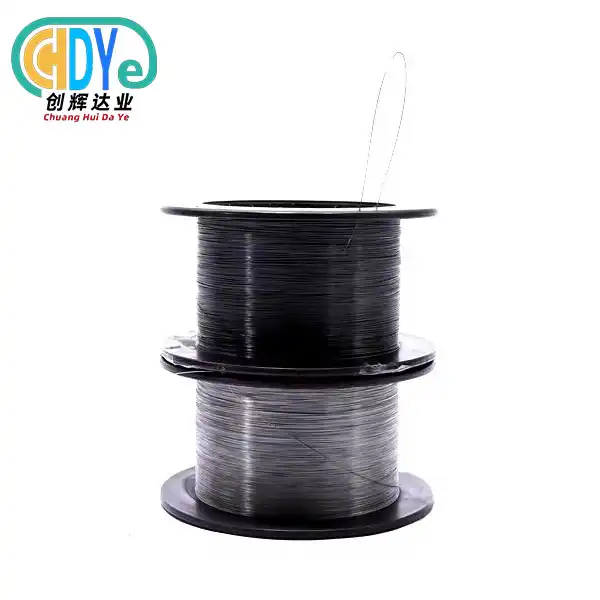
Pure tantalum wire solves problems that regular welding supplies can't, making it a crucial filling material for the production of electronics and vacuum systems. This very pure refractory metal wire (usually having more than 99.95% tantalum in it) lets makers make parts that don't leak or rust in places where equipment failure is not an option. Pure tantalum wire is chemically neutral and thermally stable, making it perfect for mission-critical uses in everything from semiconductor processing rooms to medical implant parts. Its unique ability to keep its structure intact in harsh conditions makes it a must-have for businesses that want to meet zero-defect manufacturing standards.
Understanding Pure tantalum wire: Properties and Specifications
Pure tantalum wire is different from other combining materials because it has a unique set of physical and chemical properties. The melting point of this metal wire is 2996°C (5425°F), which shows that it is refractory. This means that it can withstand temperatures that would melt most welding supplies. The wire has a density of about 16.6 g/cm³, which gives it a lot of mass that helps keep the arc stable during gas tungsten arc welding (GTAW/TIG) processes.
Chemical Purity Standards
The best performance for tantalum welding is set by the purity levels. Standard business grades keep the purity at 99.95% (3N5), but advanced electronics use 99.99% (4N) purity to keep sensitive circuits from getting messed up. Irregular impurity control is the most important requirement. The oxygen content must be less than 0.015%, the nitrogen content must be less than 0.005%, and the hydrogen content must be less than 0.0005%. These strict limits keep the heat-affected zone from becoming weak, so weld lines stay flexible during thermal cycles.
Material Grade Comparison
Different types of tantalum are used for different tasks. R05200 is made of electron-beam-melted tantalum that has not been alloyed and has the best corrosion protection and flexibility. Although R05252 does contain about 2.5% tungsten, which makes it stronger at high temperatures but less flexible. R05400 grade keeps the ultra-high purity needed for making semiconductors and medical devices, where even a small amount of pollution could ruin the quality of the finished product. Teams in charge of buying things have to make sure that the grades they choose are right for the heat, mechanical, and chemical exposure conditions of the job.
Mechanical Performance Characteristics
Pure tantalum wire can run easily during the TIG welding process without cracking because it is very flexible and has a low temperature at which it changes from being flexible to brittle. This wire keeps its tensile elongation values above 15-20%, which means that weld deposits can expand and contract with temperature changes without breaking. Because the metal naturally absorbs gases, it forms a self-healing pentoxide (Ta2O5) layer after the weld that protects against chemical attack in places where glass linings or nickel-based alloys would break down quickly.
Applications of Pure tabtalum wire in Electronics and Vacuum Systems
pure tantalum wire is used in the electronics production industry for tasks that need to be completely reliable. Welded tantalum parts are used in semiconductor manufacturing equipment in process rooms that are exposed to plasma conditions that are corrosive and reactive gases. Manufacturers use this special wire to connect room walls, gas distribution pipes, and heating elements that need to keep the vacuum intact and not be damaged by cleaning agents and etchants that are based on fluorine.
Vacuum Furnace Component Fabrication
Vacuum metalworking equipment that works above 2000°C needs building materials that don't evaporate and keep their strength. In these extremely high-temperature settings, pure tantalum wire joins heat shields, heating elements, and crucible systems. Because the wire has a low vapor pressure and is resistant to temperature shock, welded parts can be heated over and over again without leaking, which would lower the quality of the vacuum. These tantalum-welded vacuum furnaces are used by companies that make aerospace parts to heat treat titanium structural parts and make custom metals.
Electronics Assembly and Microelectronics
Pure tantalum wire is used in high-reliability circuit production to make airtight seals in hybrid microcircuits and sensor packages. The wire's electrical conductivity and thermal expansion coefficient are very close to those of ceramic surfaces that are used in electronic packing. This keeps stress from building up because of heat. Manufacturers of medical electronics use this material to join biocompatible tantalum lead lines and marking bands together. They do this because they know that the weld zones will have the same corrosion resistance as the base metal when they are inserted in living things.
Chemical Process Equipment Repair
Even though this piece is mostly about electronics and vacuums, the wire can also be used to keep production equipment in industries that are close by. Manufacturers of pharmaceutical processing equipment use welded patches to fix broken tantalum linings inside glass-lined reactors. The use of this wire in this application shows that it can make airtight seals on thin tantalum sheets (0.5mm to 0.76mm), which can be directly applied to making delicate vacuum system parts and electronic cases.
Data on how well pure tantalum wire works in real life backs up its value argument. A company that makes semiconductor equipment reported a 40% drop in unplanned maintenance after switching from tantalum parts that were physically attached to units that were welded in plasma etch chambers. Crevice rust at fastener surfaces was eliminated, which increased the service life of a component from 18 months to over 30 months. This greatly decreased the total cost of ownership, even though the initial material input was higher.
Comparison with Other Welding Wires for Electronics and Vacuum Applications
The choice of materials has a big effect on how well and how much it costs to run tools over time. Tungsten welding wire has a higher melting point (3422°C), but it is weak at room temperature, which makes it harder to check and make sure the quality of the weld after it has been made. Also, tungsten welds have a higher electrical resistance than tantalum welds. This could be a problem in situations where current needs to flow through welded parts without making too much heat.
Titanium Wire Limitations
Titanium welding wire is very resistant to rust in oxidizing environments, but it breaks down quickly in reducing environments or compounds that contain fluorine, which are common in semiconductor processes. Because the metal is very reactive with oxygen, it needs a protecting gas that is very pure (99.999% argon at a minimum) when it is being welded. This makes the process more complicated. Titanium has a higher thermal expansion rate than ceramics, which is used in electronic packaging. This means that stress-induced breakdowns during thermal cycling could happen.
Niobium Performance Profile
Niobium welding wire is a cheaper option to tantalum when corrosion protection is not the most important factor. The material can be shaped easily and works well in vacuum, but it doesn't hold up well against hydrofluoric acid and other harsh chemicals. Niobium welds also give off a little more gas when they are vacuum-packed, which is why tantalum is the best metal for ultra-high vacuum systems that work below 10⁻⁹ torr.
Comparing the properties of different materials shows how unique tantalum is. Corrosion resistance in hot, strong acids is still the best of all hard metals. Thermal stability from very cold temperatures to very high temperatures gives designers options that other materials don't have. When you combine mechanical ductility, electrical conductivity, and biocompatibility, you get a performance range that other welding lines can't match.
Application-specific needs should come first in the factors used to make procurement decisions. Tantalum has better vapor pressure properties than other metals that are used in vacuum devices that work above 1800°C. Tantalum is used in electronics that need to seal hermetically with ceramic surfaces because it doesn't change shape when heated or cooled. Chemical contact to chemicals containing fluorine requires tantalum to have a very high barrier. If cost is important in less demanding uses, niobium or titanium wire might be a better choice, but mission-critical systems almost always need pure tantalum wire
How to Weld with Pure Tantalum Wire: Best Practices and Tips
For pure tantalum wire to go well, the area must be kept very clean and the temperature must be kept just right. The getter properties of the metal are good in service, but they become a problem during welding because the molten pool actively takes airborne contaminants. Any oil on the surface, fingerprints, or drawing lube will evaporate and react with the weld puddle, making the metal porous and weak.
Pre-Weld Preparation Requirements
To get rid of rust and contamination, wire and base metal surfaces need to be cleaned with chemicals and then pickled in acid. A mixed acid pickle (hydrofluoric and nitric acid solution) gets rid of organic leftovers, and acetone degreasing takes off oxide layers. For mechanical cleaning in between chemical treatments, only stainless steel wire brushes should be used. Never carbon steel. To keep things from getting dirty again, cleaned materials should be handled with lint-free gloves and fused within 24 hours.
Shielding Gas Specifications and Equipment Setup
Gas tungsten arc welding (GTAW/TIG) is the only way to join tantalum that works. The quality of the shielding gas must be at least 99.999% (5N) argon or helium. To protect the metal while it cools, standard welding uses both torch protection and trailing shields until the temperature goes below 260°C. Purge rooms are helpful for complex shapes because they fill the whole work area with an inert atmosphere, which stops any air from getting in.
Welding equipment should include:
- DC electrode-negative (DCEN) power supply lets you precisely control low-amperage loads for thin parts.
- 2% thoriated or ceriated tungsten electrodes that have been ground to sharp points to focus the arc energy.
- Gas lens collet bodies that make sure gas flows smoothly without turbulence.
- Trailing shield fixtures are used to cover the weld bead while it cools.
The best heat settings depend on how thick the cloth is. For 0.25 mm thin foil, you only need 10-15 amps and very little filler. With intentional filler wire feeding, heavier parts (3.0 mm) need 80 to 120 amps. Too much heat makes the grains bigger and less flexible, while not enough electricity makes the fusion uneven and the material porous.
Visual Quality Control Indicators
Color of the weld beads gives you instant feedback on quality. Bright silver means that the atmosphere is properly protected and that the amount of contamination is okay. The light straw coloring says that the shielding isn't very good—fine for non-critical uses but needs more research. Powder that is blue, purple, or white means that the metal is severely oxidizing and weakening. These welds need to be taken out and worked on again. This color-based inspection method lets you make changes to the process in real time, before you do long join runs.
Common Welding Defects and Solutions
Porosity usually happens when the surface isn't cleaned well enough or when protective gas coverage isn't good enough. To solve the problem, better pre-weld preparation and more following shield covering are needed. Cracking is a sign of interstitial embrittlement caused by gas absorption during welding. Check the certifications of the wire and base metal while also improving the purity of the shielding gas. If there isn't enough voltage or the joint isn't fitted correctly, there may be incomplete fusing. To fix this, increase the heat input and make sure the gap stays between 0 and 0.1 mm.
Procuring Pure tantalum wire What B2B Buyers Need to Know
To build a trustworthy supply chain for high-purity pure tantalum wire, providers must be judged by strict scientific and business standards. Certifications of materials are the basis for evaluating suppliers. ASTM B365 compliance makes sure that standards for size and makeup are met, and AWS A5 compliance checks that welding performance traits are met. Systematic quality management is shown by ISO 9001:2015 certification, but licenses that are specific to a material are more important than general quality standards.
Critical Supplier Evaluation Factors
Interstitial gas analysis (IGA) certificates tell the difference between approved producers and vendors of goods. When a reputable maker ships wire, they include paperwork that lists the amount of oxygen, nitrogen, hydrogen, and carbon in each lot. Because of this, batches of materials with different amounts of pollution can't be mixed, which would lead to inconsistent weld quality. Protocols for surface integrity checking should include checks for die lines, leftover lubricants, and iron particles buried in the surface, as well as chemical cleaning and acid pickling.
Pricing Structure and Order Volume Considerations
The quality of the material has the most significant effect on unit price. Most of the time, standard 99.95% purity wire costs 15–25% less than 99.99% ultra-high purity types. The diameter of the wire affects the price because it makes it harder to make. Diameters smaller than 0.5 mm cost more because they need special drawing tools. Order volume is a great way to save money on costs; makers often offer discounts of 10–15% for amounts over 50 kilograms, and annual purchase deals can save you even more.
Lead times range a lot depending on how complicated the specifications are. Standard grade stock sizes (0.8mm, 1.0mm, 1.6mm) usually ship within two to three weeks. For custom sizes or ultra-high purity grades, it may take 6–10 weeks because makers have to melt and draw the material more than once. Strategic buyers keep an emergency supply of widely used standards on hand and plan custom orders around expected production needs.
Logistics and Technical Support Services
When refractory metals are shipped internationally, they need special packaging to keep them from getting contaminated during travel. Suppliers of good-quality vacuum-seal wire coils in moisture barrier bags with desiccant packs. The coils are then packed in wooden cases that meet international standards set by ISPM-15. For easier customs clearing and receiving inspection, documentation packages should include material certificates, test results, and English-language directions on how to handle the goods.
Strategic partners are different from transactional sellers because they offer technical help. Manufacturers who have their own welding labs can help with developing procedures, fixing quality problems, and suggesting ways to make the process better. This way of working together is especially helpful when expanding into new areas of application or making more products. Having access to metals experts speeds up the process of solving problems and lowers the cost of growth compared to working alone.
Conclusion
Pure tantalum wire has become a crucial component of the infrastructure for the production of electronics and vacuum systems where regular materials fall short. Its unique mix of chemical inertness, heat stability, and mechanical flexibility makes it possible for hermetic joining to happen in places where other materials would break down quickly. In mission-critical situations, the refractory metal's high cost is justified by its ability to keep its shape at very high and very low temperatures and against strong chemical attacks.
To do the job right, you need to know both the basics of material science and how to weld things together. Controlling atmospheric contamination, meticulously cleaning the surface, and careful management of heat are what separate reliable welds from weak fails. Long-term, strategies for buying that focus on the technical skills and paperwork of suppliers are more valuable than those that look for the lowest unit price. Companies that put money into the right infrastructure for tantalum welding always get more reliable tools and lower costs over their lifetime.
FAQ
Q: Why does pure tantalum wire excel in vacuum applications?
A: Pure tantalum wire demonstrates exceptionally low vapor pressure even at elevated temperatures, preventing material vaporization that would contaminate vacuum chambers. The metal's low outgassing rate maintains vacuum integrity in ultra-high vacuum systems operating below 10⁻⁹ torr. Chemical stability prevents reaction with residual gases present in vacuum environments, eliminating a common cause of weld degradation. These properties combine to provide service life measured in decades rather than months for vacuum system components.
Q: Can tantalum wire substitute directly for tungsten wire in welding applications?
A: Due to basic changes in material properties and welding traits, direct substitution doesn't work very often. Tungsten's higher melting point makes it useful for uses in very hot or very cold conditions, but its brittleness makes it harder to handle and check after welding. Tantalum is better for chemical exposure and mechanical stress conditions because it is more flexible and doesn't rust. The choice of material between these hard metals should be based on their applications, not on how well they can be interchanged.
Q: What criteria should companies use to evaluate pure tantalum wire suppliers?
A: The main evaluation factor is material traceability paperwork that includes lot-specific interstitial gas analysis. ISO 9001:2015 approval shows that quality management is done in a planned way, and ASTM B365 compliance makes sure that standards for makeup and size are met. Technical support skills, such as helping with welding procedures and metallurgical fixing, set key partners apart from common sellers. Being able to make both small batches of prototypes and large amounts of products gives the supply chain freedom as projects move from research to production.
Partner with Chuanghui Daye for Your Pure Tantalum Wire Requirements
Shaanxi Chuanghui Daye Metal Material Co., Ltd. has been in the rare metals business for more than 30 years and uses ISO 9001:2015-approved production methods to make high-purity pure tantalum wire that meets the strictest requirements. Our factory is in Baoji, which is known as China's Titanium Capital. It uses electron beam furnaces, precision rolling equipment, and high-tech quality control systems to make materials with confirmed interstitial gas content that can be used in semiconductors, vacuum systems, and medical devices. We offer full tracking documents, production of custom diameters, and expert help for developing welding procedures. Whether you need a small amount for a prototype or a lot of wire for mass production, our pure tantalum wire supplier can make sure you get steady quality and on-time delivery. Contact our expert team at info@chdymetal.com to discuss your specific requirements and receive detailed material certifications demonstrating our commitment to excellence in refractory metal manufacturing.
References
1. Davis, J.R. (2001). Alloying: Understanding the Basics. Materials Park, OH: ASM International, pp. 541-556.
2. Lassner, E., & Schubert, W.D. (1999). Tungsten: Properties, Chemistry, Technology of the Element, Alloys, and Chemical Compounds. New York: Kluwer Academic/Plenum Publishers.
3. Schussler, M., & Griesser, S. (2015). "Welding of Refractory Metals: Tantalum, Niobium, Molybdenum, and Tungsten." Welding Journal, 94(3), 76-84.
4. American Society for Testing and Materials. (2019). ASTM B365-12: Standard Specification for Tantalum and Tantalum Alloy Rod and Wire. West Conshohocken, PA: ASTM International.
5. Cardonne, S.M., Kumar, P., Michaluk, C.A., & Schwartz, H.D. (1995). "Tantalum and Its Alloys." International Journal of Refractory Metals and Hard Materials, 13(4), 187-194.
6. AWS Committee on Filler Metals. (2012). Specification for Welding Rods, Electrodes, and Filler Metals (AWS A5 Series). Miami, FL: American Welding Society.
Learn about our latest products and discounts through SMS or email