- English
- French
- German
- Portuguese
- Spanish
- Russian
- Japanese
- Korean
- Arabic
- Greek
- German
- Turkish
- Italian
- Danish
- Romanian
- Indonesian
- Czech
- Afrikaans
- Swedish
- Polish
- Basque
- Catalan
- Esperanto
- Hindi
- Lao
- Albanian
- Amharic
- Armenian
- Azerbaijani
- Belarusian
- Bengali
- Bosnian
- Bulgarian
- Cebuano
- Chichewa
- Corsican
- Croatian
- Dutch
- Estonian
- Filipino
- Finnish
- Frisian
- Galician
- Georgian
- Gujarati
- Haitian
- Hausa
- Hawaiian
- Hebrew
- Hmong
- Hungarian
- Icelandic
- Igbo
- Javanese
- Kannada
- Kazakh
- Khmer
- Kurdish
- Kyrgyz
- Latin
- Latvian
- Lithuanian
- Luxembou..
- Macedonian
- Malagasy
- Malay
- Malayalam
- Maltese
- Maori
- Marathi
- Mongolian
- Burmese
- Nepali
- Norwegian
- Pashto
- Persian
- Punjabi
- Serbian
- Sesotho
- Sinhala
- Slovak
- Slovenian
- Somali
- Samoan
- Scots Gaelic
- Shona
- Sindhi
- Sundanese
- Swahili
- Tajik
- Tamil
- Telugu
- Thai
- Ukrainian
- Urdu
- Uzbek
- Vietnamese
- Welsh
- Xhosa
- Yiddish
- Yoruba
- Zulu
What Are Common Applications of Titanium Welded Pipe?
Titanium welding pipe is an important material in many industries because it doesn't rust, is lightweight, and stays strong. These highly precise goods are used in a wide range of settings, including chemical plants, aerospace systems, marine applications, heat exchangers, and the production of medical devices. Titanium welded pipe has special qualities that make it an important part of many businesses that need reliable performance in harsh environments, high temperatures, and weight-sensitive situations where regular materials don't work.
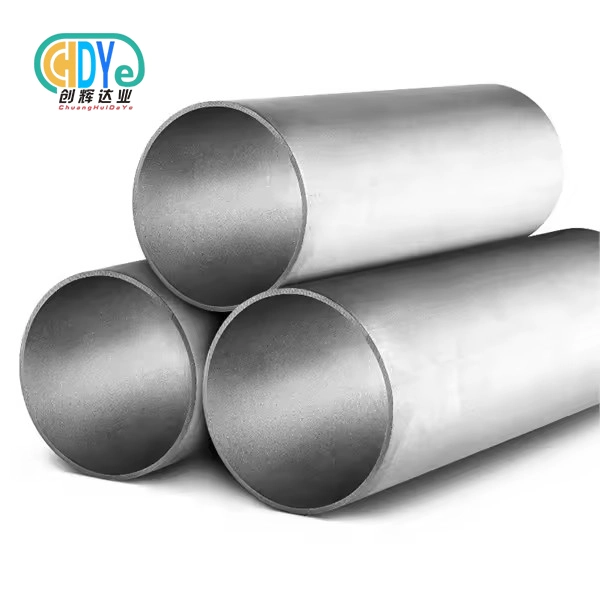
Overview of Titanium Welded Pipes
Manufacturing Process and Material Properties
Titanium welded pipes are a well-thought-out option that are made by carefully rolling and joining titanium sheets or strips together. Advanced TIG and plasma welding technologies are used in the production process to make sure that the welds are strong and the surfaces are smooth. With this method, goods are made that meet strict international standards like ASTM B338, ASTM B861, and ASME SB-338.
A welded titanium tube is appealing because of the unique properties of its material. Titanium has a mass about 45% lower than steel, which makes it very strong for its weight. This makes it very useful in situations where weight is important. In most situations, it is more resistant to corrosion than stainless steel. This is especially true in chloride-rich settings, where regular materials break down quickly.
Grade Classifications and Selection Criteria
Knowing about the different grades of titanium helps procurement workers choose the right materials. Grade 2 titanium, also called commercially pure titanium, is very good at resisting rust and being shaped, which makes it good for chemical processing. Grade 5 (Ti-6Al-4V) is stronger than Grade 4 and is perfect for aircraft and high-stress structural uses. Grade 9 (Ti-3Al-2.5V) has a middle strength and can be welded very well, making it useful for use in pressure vessels.
The choice between welded and seamless configurations is based on the needs of the product. Because they are welded, pipes with bigger diameters are cheaper and still work very well. While not being as resistant to corrosion as seamless options, they give manufacturers more freedom to make unique sizes.
Key Applications of Titanium Welded Pipe Across Industries
Chemical and Petrochemical Processing
Titanium-welded pipes are very important to the chemical industry because they can move strong media like acids, chlorides, and high-purity chemicals. For these uses, you need materials that can stand up to harsh corrosive conditions without losing their strength. Titanium is an important material for process pipe systems because it is very resistant to chemical attack, even at high temperatures.
Welded titanium tubing is used in distillation columns, heat exchanger networks, and transfer lines that deal with corrosive chemicals in petrochemical plants. The material's ability to keep its purity levels high stops pollution that could lower the quality of the product or cause expensive production stops. It also saves money on upkeep and keeps operations running smoothly because the service life is longer.
Marine and Offshore Engineering
When used in the marine environment, the corrosive nature and high salt content of seawater make it difficult to use normal materials. Titanium welded pipes work well in these conditions and are effective in cooling systems, plants that desalinate seawater, and installations on offshore platforms. Stress corrosion cracking can't happen to this material, so it will last for a long time in marine settings.
Titanium pipe systems are used in offshore oil and gas activities for fire suppression networks, process cooling circuits, and seawater injection systems. When corrosion resistance and mechanical strength are combined, these systems can work effectively in harsh marine situations with little need for maintenance.
Aerospace and Defense Applications
To get the most out of fuel economy and payload capacity, the aerospace industry needs materials that are very strong but not too heavy. Titanium-weld pipes are very important in hydraulic lines, fuel transfer networks, and airplane exhaust systems. The material is stable at high temperatures and doesn't wear down easily, so it works well even in harsh circumstances.
In missile systems, naval ships, and military planes, where performance reliability is closely linked to task success, welded titanium tubing is used. In these important situations, the material's ability to handle fast changes in temperature and keep its shape under high stress makes it very useful.
Titanium Welded Pipe vs. Alternative Materials
Performance Comparison with Traditional Materials
When purchasing materials, people in charge of getting them must look at more than just the initial costs. They must also think about how the materials will perform in the long run. Even though stainless steel is cheaper at first, it needs to be replaced more often in places where it will rust, so it costs more over its lifetime. Carbon steel is cheaper to buy at first, but it doesn't fight corrosion well enough for many industrial uses.
Aluminum is lighter than titanium, but it isn't as strong or resistant to corrosion in harsh settings. Copper is a great conductor of heat, but it corrodes easily in many chemical environments. The corrosion protection of fiberglass-reinforced plastic is good, but it's not strong enough for high-pressure uses.
Cost-Benefit Analysis for Long-Term Operations
When you look at the economic benefits of titanium welded pipes over long periods of time, they become clear. Even though the initial prices of materials are higher than those of traditional options, the lower total cost of ownership is often justified by the longer service life, lower maintenance needs, and higher reliability of the system. Titanium solutions are especially cost-effective for industries that have to repair pipes often because of corrosion.
Costs are cut even more by getting rid of protective coatings, cathodic protection systems, and regular checks. Additionally, the shorter downtime caused by system failures helps improve business efficiency and protect revenue.
Procurement Insights for Titanium Welded Pipes
Supplier Evaluation and Quality Assurance
To successfully buy titanium welded pipes, you need to carefully evaluate suppliers based on their manufacturing skills, quality certifications, and expert support services. With ISO 9001:2015 certification, you can be sure that the whole production process will follow international quality standards. Additionally, suppliers must show that they follow industry-specific standards like ASME, ASTM, and their foreign equivalents.
When evaluating a manufacturing plant, it's important to look at its welding technology, inspection tools, and quality control methods. Advanced TIG and plasma welding systems make sure that the welds are of the highest quality, and thorough testing methods make sure that the material properties and measurements are correct. Traceability documentation lets you keep track of the whole history of a product, from the raw materials to the end delivery.
Lead Times and Minimum Order Considerations
When you buy titanium welded pipes from around the world, you have to deal with long lead times and minimum order amounts. Standard products usually take between 4 and 6 weeks to deliver, while custom specifications can take up to 12 weeks, based on how complicated they are. Using these dates to plan purchase schedules keeps projects on track and makes sure materials are available when they're needed.
Minimum order amounts change based on the grade, pipe diameter, and wall thickness. Minimum orders for smaller diameter pipes are usually cheaper, while minimum orders for large diameter welded configurations may be higher. Forecasting together with suppliers helps with planning and could lead to lower minimum needs for long-term customers.
Value-Added Services and Technical Support
Leading providers offer a wide range of technical support services, such as help with choosing materials, application engineering, and custom fabrication. In particular, these services come in handy for complicated tasks that need unique shapes or combinations. Engineering support helps choose the best materials for a job while also making sure they meet all the rules and codes that apply.
Custom fabrication lets suppliers offer pre-built assemblies, which cuts down on installation time and makes sure quality control in a controlled production environment. Extra services like non-destructive testing, special packaging, and faster delivery choices make the buying process even better.
Chuanghui Daye Metal Material: Your Trusted Manufacturing Partner
Advanced Manufacturing Capabilities and Quality Standards
While based in China's famous "Titanium Capital" (Baoji High-tech Development Zone), Shaanxi Chuanghui Daye Metal Material Co., Ltd. has more than 30 years of experience making titanium welded pipes. Our cutting-edge center uses advanced TIG and plasma welding technology to make sure that the welds are strong and that the surface finish meets the highest international standards.
Our entire manufacturing infrastructure includes electron beam furnaces, precision rolling equipment, and high-tech machines for machining that give us full control over the whole production process. Our ISO 9001:2015-certified quality control system is used at every step, from checking the raw materials to putting them in boxes. This strict method makes sure that the quality of the products is always the same and that every shipment has all the paperwork needed to track it.
Comprehensive Product Portfolio and Customization Services
We are experts at making titanium welded pipes in a wide range of grades, sizes, and specs to meet the needs of different industries. Standard designs that meet ASTM B338, ASTM B861, and ASME SB-338 standards are part of our product line. We also offer custom solutions that are made to fit the needs of each application.
We can help with big infrastructure projects in the chemical processing, marine engineering, and power production industries because we can weld titanium pipes with a large diameter. Our tech team works closely with customers to come up with the best solutions that balance performance needs with cost concerns. This makes sure that projects succeed in all global markets.
Chuanghui Daye is a trustworthy company for procurement workers looking for titanium welded pipe solutions because it uses cutting-edge manufacturing technology, strictly controls quality, and focuses on customer satisfaction.
Conclusion
Titanium welded pipes are a great option for businesses that need pipes that are resistant to corrosion, strong, and reliable over time. Their usefulness in modern industry is shown by the fact that they can be used in chemical processing, aircraft, marine, and other tough situations. Even though they may cost more at first than regular materials, they usually have better lifecycle economics because they last longer, need less upkeep, and work more reliably. To make sure you get the best materials and the best results from your applications, you need to carefully evaluate suppliers, check their quality certifications, and get full technical help.
FAQ
Q: What factors influence the corrosion resistance of titanium welded pipes?
A: The corrosion resistance of titanium welded pipes depends on several key factors, including the titanium grade, welding quality, and operating environment. Grade 2 titanium offers excellent resistance to most acids and chlorides, while higher grades provide enhanced performance in more aggressive conditions. Proper welding techniques using inert gas protection ensure that the heat-affected zone maintains corrosion resistance properties comparable to the base material.
Q: How do welded titanium pipes perform compared to seamless alternatives under high pressure?
A: Welded titanium pipes demonstrate excellent performance under high-pressure conditions when manufactured according to established standards. Modern TIG and plasma welding techniques create weld joints with strength properties equivalent to the parent material. ASTM and ASME standards provide pressure ratings for welded configurations that match seamless alternatives in most applications, making welded pipes suitable for demanding pressure vessel and piping applications.
Q: What are typical lead times for bulk orders of titanium welded pipes?
A: Lead times for titanium welded pipe orders typically range from 1-2 weeks for standard specifications, extending to 2-3 weeks for custom configurations. Factors affecting delivery schedules include order quantity, pipe diameter, wall thickness, and grade requirements. Large diameter pipes and specialized alloys may require extended production times due to manufacturing complexity and material availability.
Partner with Chuanghui Daye for Premium Titanium Welded Pipe Solutions
Shaanxi Chuanghui Daye Metal Material delivers exceptional titanium welded pipe solutions backed by three decades of manufacturing expertise and ISO 9001:2015 quality certification. As a leading titanium welded pipe manufacturer in China's Titanium Capital, we provide comprehensive customization services, advanced welding technology, and reliable global delivery. Contact our engineering team at info@chdymetal.com to discuss your specific requirements and receive expert guidance on optimizing your material selection for superior performance and cost-effectiveness.
References
1. Boyer, R., Welsch, G., & Collings, E.W. "Materials Properties Handbook: Titanium Alloys." ASM International, Materials Park, Ohio.
2. Donachie, Matthew J. "Titanium: A Technical Guide, 2nd Edition." ASM International Technical Publications.
3. American Society for Testing and Materials. "ASTM B338 Standard Specification for Seamless and Welded Titanium and Titanium Alloy Tubes for Condensers and Heat Exchangers."
4. American Society of Mechanical Engineers. "ASME SB-338 Specification for Seamless and Welded Titanium and Titanium Alloy Tubes for Condensers and Heat Exchangers."
5. Lutjering, Gerd and Williams, James C. "Titanium: Engineering Materials and Processes, 2nd Edition." Springer-Verlag Berlin Heidelberg.
6. International Titanium Association. "Guidelines for Welded Titanium Pipe Systems in Industrial Applications." Technical Report Series, Broomfield, Colorado.
Learn about our latest products and discounts through SMS or email