- English
- French
- German
- Portuguese
- Spanish
- Russian
- Japanese
- Korean
- Arabic
- Greek
- German
- Turkish
- Italian
- Danish
- Romanian
- Indonesian
- Czech
- Afrikaans
- Swedish
- Polish
- Basque
- Catalan
- Esperanto
- Hindi
- Lao
- Albanian
- Amharic
- Armenian
- Azerbaijani
- Belarusian
- Bengali
- Bosnian
- Bulgarian
- Cebuano
- Chichewa
- Corsican
- Croatian
- Dutch
- Estonian
- Filipino
- Finnish
- Frisian
- Galician
- Georgian
- Gujarati
- Haitian
- Hausa
- Hawaiian
- Hebrew
- Hmong
- Hungarian
- Icelandic
- Igbo
- Javanese
- Kannada
- Kazakh
- Khmer
- Kurdish
- Kyrgyz
- Latin
- Latvian
- Lithuanian
- Luxembou..
- Macedonian
- Malagasy
- Malay
- Malayalam
- Maltese
- Maori
- Marathi
- Mongolian
- Burmese
- Nepali
- Norwegian
- Pashto
- Persian
- Punjabi
- Serbian
- Sesotho
- Sinhala
- Slovak
- Slovenian
- Somali
- Samoan
- Scots Gaelic
- Shona
- Sindhi
- Sundanese
- Swahili
- Tajik
- Tamil
- Telugu
- Thai
- Ukrainian
- Urdu
- Uzbek
- Vietnamese
- Welsh
- Xhosa
- Yiddish
- Yoruba
- Zulu
Lightweight Titanium Fasteners for Automotive Projects
As the auto industry continues to push the limits of weight reduction and performance improvement, lightweight titanium fasteners are becoming more and more important for making modern cars. These unique parts are very strong while also being very light. This gives engineers in the automotive industry a way to improve both structural integrity and fuel economy. Titanium alternatives to standard steel fasteners are better at resisting corrosion and lasting longer. This makes them especially useful in harsh automotive settings where chemicals, moisture, and changes in temperature are always present.
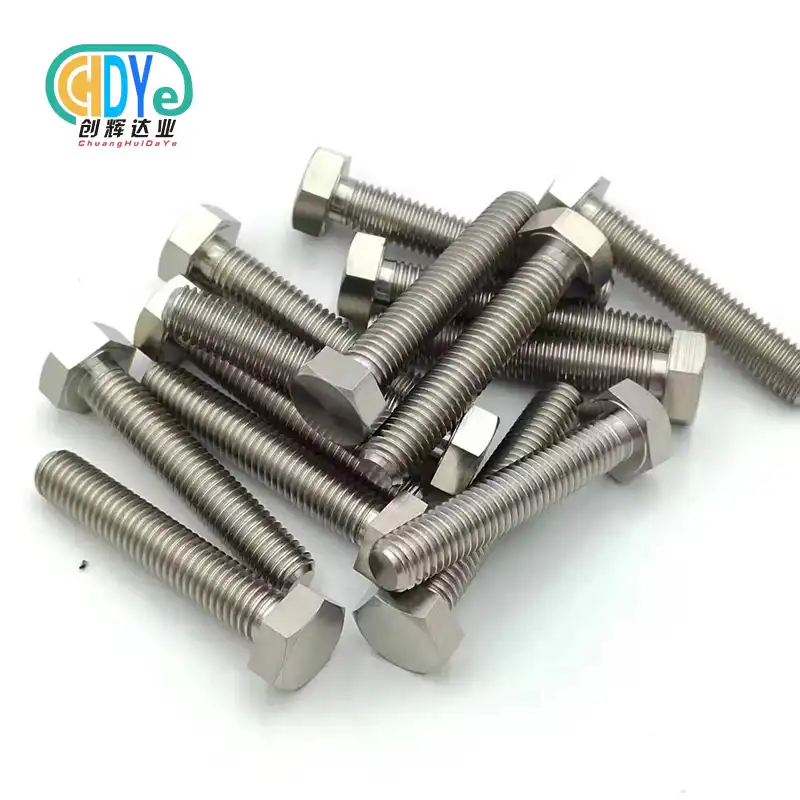
Understanding Titanium Fasteners in Automotive Applications
Titanium fasteners, which are made from high-quality titanium alloys that offer unmatched performance, are a revolutionary improvement in car hardware. High-quality materials, like Grade 1, Grade 2, and Grade 5 titanium, are used to make these parts. Each has its own qualities that are perfect for certain automotive needs.
Core Properties and Performance Characteristics
Titanium has an exceptionally tall proportion of quality to weight, which makes these clamps exceptionally valuable for car employments. Titanium clasp permits for critical weight reduction without compromising basic astuteness since they have a thickness that is approximately 40% lower than steel, while still having superior mechanical properties. This weight misfortune specifically leads to superior gas mileage and better care of the car.
Another vital advantage in vehicle settings is resistance to erosion. Titanium's characteristic oxide layer ensures it is exceptionally well from contaminants like street salt, chemicals, and water that can harm car parts. This resistance ensures a longer benefit life and brings down the requirement for upkeep, which is particularly supportive in critical systems like brake assemblies and wear components.
Temperature Tolerance and Non-Magnetic Properties
Extraordinary temperature changes happen in car employment, from the hot motor compartment to cold winter conditions. In a temperature range from -250°C to 600°C, titanium clamps keep their mechanical qualities. This implies they work dependably in a variety of circumstances. Moreover, since they aren't attractive, they do not meddle with delicate electronic frameworks that are becoming more prevalent in present-day cars.
Comparing Titanium Fasteners with Alternative Materials
The choice of fastener materials has a big effect on how well a car works, how long it lasts, and how much it costs to maintain. Knowing how titanium is different from other materials helps companies that make cars make smart choices.
Titanium versus Steel Fasteners
Because they are cheap and easy to find, steel fasteners have been used most often in automotive applications. However, titanium has important benefits that make the higher original cost worth it. Fasteners made of steel usually weigh 2.5 times more than those made of titanium. They also corrode more easily, especially in harsh settings.
Titanium is better than steel at resisting fatigue, which makes it perfect for parts that are stressed over and over again, like engine bearings and suspension systems. This increased sturdiness means that it will need to be replaced less often and cost less over its lifetime, even though it costs more up front.
Aluminum Fastener Comparison
Aluminum screws are almost the same weight as titanium, but they aren't as solid, so they're not great for high-stress circumstances. Titanium screws have approximately 60% more ductile quality than aluminum ones, but they are almost the same weight. This quality advantage is exceptionally critical in safety-critical circumstances where a broken latch might compromise the safety of the car.
Grade Selection for Automotive Applications
Titanium grades are diverse in what amalgams they are made of and the qualities they have. Since review 2 titanium is exceptionally safe to erosion and simple to shape, it can be utilized in a wide range of car employments. Review 5 titanium is more grounded than review 4 titanium, making it suitable for high-stress parts like motor congregations and chassis joins. By understanding these contrasts, you can select the right medium for the work as required.
Procurement Insights: How to Source and Purchase Titanium Fasteners
When buying titanium screws strategically, you need to think carefully about the supplier's skills, quality certifications, and delivery times. When making cars, automakers have to find a balance between cost and performance needs while also making sure that the supply line is always reliable.
Supplier Evaluation and Certification Requirements
For automotive uses, quality standards must be very high, so supplier certification is very important. ISO 9001:2015 certification makes sure that quality control is carried out at every stage of the manufacturing process, from checking the raw materials to delivering the finished product. Suppliers should also keep up manufacturing skills at an aerospace level, since these standards often go beyond what is needed for cars and give extra quality guarantee.
The ability to manufacture is a very important factor in choosing a seller. High-tech factories with electron beam ovens, precise machining tools, and a wide range of testing options make sure that the quality of the products is always the same. For specialized car uses, suppliers who offer both standard and custom manufacturing services are useful.
Bulk Ordering and Inventory Management
Manufacturing companies that make cars usually need a lot of screws that can be delivered on time. Strategies for buying in bulk can save you a lot of money while still making sure you have enough inventory. But because titanium is more valuable, it needs to be carefully managed so that carrying costs are low and supplies are always available.
For automotive uses, custom specifications are common. This means that suppliers need to be able to make fasteners that meet particular size requirements or range from M2 to M25 specifications. Suppliers that offer full technical support can help with making sure that the design of fasteners is best for each purpose.
Case Studies and Applications of Titanium Fasteners in the Automotive Industry
The usefulness of titanium fasteners in different vehicle systems is shown by real-life examples. These cases show that losing weight and getting better at what you do can lead to measurable benefits.
High-Performance Vehicle Applications
Due to their light weight, titanium fasteners have been most widely used in racing and high-performance cars. Formula 1 teams say that switching from steel fasteners to titanium ones across the whole car saves them 15 to 20 kilograms of weight. This decrease in weight makes the vehicle go faster, stop better, and use less gas.
Applications in suspension systems show off titanium's benefits in terms of wear resistance. Racing teams that use titanium suspension fasteners say that the bolts fail a lot less often than steel ones, even when they are under a lot of stress. This increase in dependability cuts down on maintenance needs and raises safety margins.
Electric Vehicle Integration
To get the most out of their batteries, electric cars need parts that are very light. Titanium fasteners are a part of strategies to reduce total weight and provide the reliability needed for battery mounting systems and structural parts. Because titanium isn't magnetic, it doesn't get in the way of electric drive systems or charge parts.
Titanium doesn't rust, which is good for uses like battery enclosures because it helps vehicles last longer and be safer. Titanium fasteners last longer, so the battery pack doesn't have to be taken apart as often. This keeps the seals in good shape and lowers the cost of maintenance over the life of the car.
Company Expertise and Product Offerings
In the automotive business, Shaanxi Chuanghui Daye Metal Material Co., Ltd. has more than 30 years of experience making titanium parts. As the "Titanium Capital" of China, is home to our facility. Its strategic position and advanced manufacturing skills allow us to provide the best titanium fastener options.
Manufacturing Capabilities and Quality Standards
We use cutting-edge tools in our production facility, such as electron beam ovens, precision machining centers, and full annealing capabilities. This high-tech manufacturing infrastructure makes it possible to make titanium fasteners that meet the needs of the car industry while keeping quality high over long production runs.
ISO 9001:2015 standards are used for quality management, and the whole production process can be tracked. Checking the raw materials makes sure that the titanium grades meet the requirements, and watching the process makes sure that the standards for accuracy in measurements and surface finish are met. Final inspection procedures check the mechanical properties and make sure the dimensions are correct before the item is packed and sent.
Product Range and Customization Services
Titanium screws come in Grades 1, 2, and 5, and their sizes range from M2 to M25, or they can be made to fit the exact needs of the customer. Bolts, nuts, screws, washers, threaded rods, studs, and anchors are just a few of the fasteners we sell. We have everything you need for automotive uses.
Custom manufacturing lets manufacturers make special fasteners that meet the specific needs of the car industry. Our expert team works with customers to make sure that the design of fasteners is optimized for each application. This ensures that the fasteners work well and don't cost too much. Standard compliance includes meeting GB, DIN, and ISO standards. Packaging choices include standard cartons and those that are tailored to the needs of the customer.
Conclusion
Lightweight titanium screws are a game-changing technology for automakers who want to improve the performance of their cars while keeping the structure strong. Due to its low weight, resistance to corrosion, and superior mechanical properties, titanium is a perfect material for current automotive uses. As the auto industry continues to focus on improving performance and gas mileage, titanium fasteners offer a tried-and-true answer that has measurable benefits across many vehicle systems. Investing in titanium fastener technology pays off in the long run by lowering the need for maintenance, making the car run better, and making customers happier.
FAQ
Q: What makes titanium fasteners suitable for automotive applications?
A: Titanium fasteners excel in automotive applications due to their exceptional strength-to-weight ratio, providing up to 40% weight reduction compared to steel while maintaining superior mechanical properties. Their outstanding corrosion resistance protects against road salt, chemicals, and environmental exposure, while their temperature stability ensures reliable performance from -250°C to 600°C.
Q: How do titanium fastener grades differ for automotive use?
A: Grade 2 titanium offers excellent corrosion resistance and formability, suitable for general automotive applications, including body panels and interior components. Grade 5 titanium provides enhanced strength characteristics, making it ideal for high-stress applications such as engine assemblies, suspension systems, and safety-critical mounting points.
Q: What cost considerations apply to titanium fastener procurement?
A: While titanium fasteners require a higher initial investment than steel alternatives, their extended service life and reduced maintenance requirements often result in lower lifecycle costs. Bulk purchasing can achieve significant cost savings, and the weight reduction benefits contribute to improved fuel efficiency, providing ongoing operational savings.
Q: Are titanium fasteners compatible with existing automotive assembly processes?
A: Titanium fasteners integrate seamlessly into standard automotive assembly processes using conventional tools and torque specifications. Their non-magnetic properties prevent interference with electronic systems, and their dimensional accuracy ensures compatibility with existing hole patterns and assembly procedures.
Transform Your Automotive Projects with Premium Titanium Fastener Solutions
Automotive manufacturers seeking superior performance and weight optimization can rely on Shaanxi Chuanghui Daye's expertise in titanium fastener manufacturing. Our Grade 1, 2, and 5 titanium fasteners deliver exceptional strength-to-weight ratios and corrosion resistance for demanding automotive applications. Contact our technical team at info@chdymetal.com to discuss your specific requirements and receive customized quotations from a trusted titanium fasteners supplier. Experience the advantages of ISO 9001:2015 certified manufacturing and over 30 years of specialized expertise in delivering reliable, high-performance fastener solutions.
References
1. Materials Science and Engineering: An Introduction, 10th Edition. Callister Jr., William D., and David G. Rethwisch. John Wiley & Sons, 2018.
2. Titanium: A Technical Guide, 2nd Edition. Donachie Jr., Matthew J. ASM International, 2000.
3. Automotive Engineering International. "Lightweight Materials in Automotive Applications: Trends and Technologies." SAE International, 2022.
4. Advanced Materials & Processes. "Titanium Alloys for Automotive Applications: Properties and Performance." ASM International, 2021.
5. Journal of Materials Processing Technology. "Manufacturing and Quality Control of Titanium Fasteners for Automotive Applications." Elsevier, 2023.
6. Automotive News. "Titanium Components in Modern Vehicle Design: Performance and Cost Analysis." Crain Communications, 2022.
Learn about our latest products and discounts through SMS or email