- English
- French
- German
- Portuguese
- Spanish
- Russian
- Japanese
- Korean
- Arabic
- Greek
- German
- Turkish
- Italian
- Danish
- Romanian
- Indonesian
- Czech
- Afrikaans
- Swedish
- Polish
- Basque
- Catalan
- Esperanto
- Hindi
- Lao
- Albanian
- Amharic
- Armenian
- Azerbaijani
- Belarusian
- Bengali
- Bosnian
- Bulgarian
- Cebuano
- Chichewa
- Corsican
- Croatian
- Dutch
- Estonian
- Filipino
- Finnish
- Frisian
- Galician
- Georgian
- Gujarati
- Haitian
- Hausa
- Hawaiian
- Hebrew
- Hmong
- Hungarian
- Icelandic
- Igbo
- Javanese
- Kannada
- Kazakh
- Khmer
- Kurdish
- Kyrgyz
- Latin
- Latvian
- Lithuanian
- Luxembou..
- Macedonian
- Malagasy
- Malay
- Malayalam
- Maltese
- Maori
- Marathi
- Mongolian
- Burmese
- Nepali
- Norwegian
- Pashto
- Persian
- Punjabi
- Serbian
- Sesotho
- Sinhala
- Slovak
- Slovenian
- Somali
- Samoan
- Scots Gaelic
- Shona
- Sindhi
- Sundanese
- Swahili
- Tajik
- Tamil
- Telugu
- Thai
- Ukrainian
- Urdu
- Uzbek
- Vietnamese
- Welsh
- Xhosa
- Yiddish
- Yoruba
- Zulu
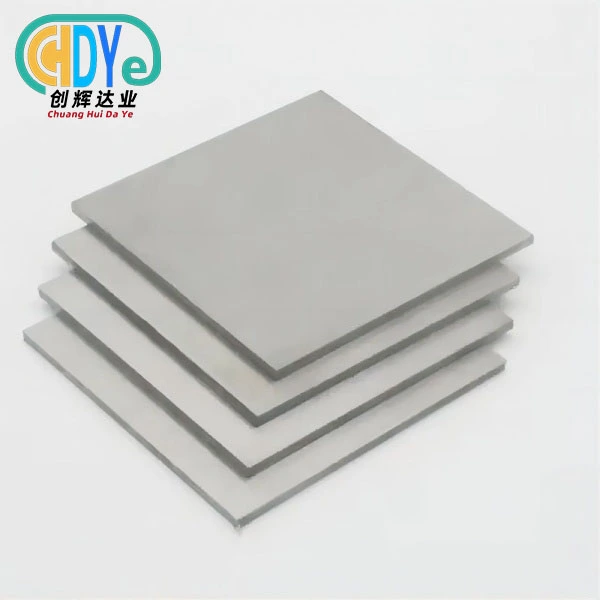
Pure Niobium Plate for Superconducting and Chemical Applications
When procurement engineers are looking for materials that will regularly function well in the most demanding environments—cryogenic superconducting cavities, hot mineral acid reactors, or high vacuum aerospace assemblies—pure niobium plate is always at the top of the list. This refractory metal mill product, with a purity of >99.9%, a density of 8.57 g/cm3 and a tensile strength of 200 to 350 MPa, answers key industrial problems that lower-grade materials cannot. This article takes B2B procurement experts through all they need to know before ordering.
Understanding Pure Niobium Plate: Properties and Production
Core Physical and Chemical Characteristics
The melting point of niobium is 2468°C and the thermal conductivity at 20°C is 53.7 W/(m·K). Its thermal expansion is a moderate 7.3 µm/(m·K), reducing stress during thermal cycling, a crucial benefit in aircraft shielding and synthetic diamond presses. On contact with air, the metal is covered with a durable passivation layer of Nb2O5, which makes it resistant to nitric acid, hydrochloric acid, and even to aqua regia. It is susceptible to hydrofluoric acid in any concentration, a feature that every chemical engineer must respect. Most importantly, niobium is a type-II superconductor and has a critical temperature of 9.2 K, which is among the highest of all elemental metals. This feature, described by the Residual Resistance Ratio (RRR), is important for applications of superconducting radio frequency (SRF) cavities. A high RRR means that there is less scattering from impurities at cryogenic temperatures; thus, the thermal conductivity is maintained and destabilizing “quench” events are avoided.
Production Process and Quality Standards
We start with very pure niobium feedstock, which is melted using High Voltage Electron Beam Melting (EBM) to maintain the high purity. The ingots obtained are forged and then rolled under controlled circumstances to get the desired thickness and microstructure. Heavy cold-working phases are followed by vacuum annealing at 900 to 1,200 °C to thoroughly recrystallize the grain structure. A homogeneous grain size of ASTM E112 No. 6 or finer minimizes “orange peel” surface flaws during deep-drawing processes. Quality control is based on three pillars: interstitial impurity analysis by Inert Gas Fusion (oxygen content must be below 150 ppm to retain ductility and RRR values), metallographic grain inspection, and non-destructive ultrasonic testing to check for internal laminations. Vacuum grade plates are regulated to a final surface roughness of Ra <0.8 µm. The industry regulatory standard is ASTM B393 (Type 1: Reactor Grade RO4200, Type 2: Commercial Grade RO4210). Chuanghui Daye can manufacture from 0.5 mm to 50 mm thick, up to 1,000 mm wide and up to 3,000 mm long, for both prototype batches and complete production runs.
Comparing Pure Niobium Plate with Alternative Materials
The selection of the correct refractory metal needs comparison of numerous connected factors. Here's how pure niobium plate measures up versus the most prevalent alternatives:
- Tantalum is almost as resistant to corrosion as niobium; however, it is almost twice as dense as niobium (16.65 g/cm³ compared to 8.57 g/cm³). Niobium is equal to chemical protection in heat exchanger linings when weight is critical, but with less mass penalty and price premium, especially below 150°C.
- Titanium has a good strength-to-weight ratio and biocompatibility, but does not have niobium’s superconducting property and is less reliable in oxidizing hot-acid conditions where niobium’s Nb 2 O 5 layer affords better passivation.
- Molybdenum and Tungsten are good candidates for ultrahigh-temperature structural applications. However, both elements are brittle at normal temperature and do not have any superconducting properties, which makes them not ideal for SRF cavity creation.
- Niobium Alloys (e.g., C-103) have tensile strength beyond 400 MPa but lose the ultra-high purity and hence the RRR values necessary for cryogenic superconducting applications.
These differences are why pure niobium does not directly compete with these metals, but instead occupies its own material niche. Procurement teams are aware of these limits and avoid expensive material substitutes.
Applications of Pure Niobium Plate in Superconducting and Chemical Fields
Superconducting RF Cavities and Particle Accelerators
Facilities like CERN and Fermilab pull high-purity niobium plate (RRR>300) into resonator cells for particle accelerators. The material is superconducting at cryogenic temperatures and can tolerate strong electromagnetic fields without thermal breakdown. The steady cryogenic performance of Niobium is especially important for MRI magnet housings and quantum computing research projects.
Chemical Processing Equipment Linings
In chemical engineering, pure niobium plate is used as loose linings or explosion-bonded cladding for reaction vessels and heat exchangers that handle hot streams of sulfuric or hydrochloric acid. It is better than zirconium in certain oxidizing situations and is a cheap alternative to tantalum in applications where the process temperatures do not go over 150°C.
Aerospace and Advanced Manufacturing
Niobium plate is a trusted shielding and structural material in aircraft systems because of its low coefficient of thermal expansion and high-temperature structural stability. In synthetic diamond production (HPHT procedures), it is used as a seed holder or shield cup in cubic high-pressure presses, where the chemical inertia prevents the contamination of the crystal lattice with carbon, thereby ensuring VVS/VS purity grades.
How to Procure Pure Niobium Plate: A B2B Buyer's Guide
Supplier Qualification and Order Logistics
When you are in need of a certified niobium plate supplier, be sure to check ISO 9001:2015 certification, ASTM B393 compliance, and complete material traceability documents. Buyers should insist on mill test data for chemical composition, mechanical properties, and grain size analysis before they approve a provider. Practical ordering concerns include minimum order quantities (varying by grade and thickness), bespoke dimensional tolerances, and lead times that generally range from two to six weeks, depending on product complexity. Suppliers having their own electron beam furnaces and rolling equipment may cut lead times considerably for urgent applications, as opposed to merchants that subcontract manufacturing. Prices reflect volatility of the global niobium ore market, purity grade, and dimensional complexity. Ultrahigh purity grade (99.99% min) sells at a premium above commercial grade (99.9% min) due to the RRR-sensitive needs of superconducting applications. The U.S. import rules place niobium in HTS Chapter 81, and purchasers are advised to verify applicable tariff codes with their logistical partners prior to ordering internationally.
Why Choose Our Pure Niobium Plate Solutions?
Shaanxi Chuanghui Daye Metal Material Co., Ltd. is situated in the Baoji High-tech Development Zone of Shaanxi Province, known as the “Titanium Capital of China”, with more than 30 years of expertise in rare and refractory metals. The firm is ISO 9001:2015 certified and has in-house electron beam furnaces, annealing furnaces, rolling machines, and precision machining equipment, thereby providing total process control from raw niobium feedstock to completed plate.
There are three purities offered: the commercial grade (99.9% min), the high-purity grade (99.95% min), and the ultra-high-purity grade (99.99% min). Before shipping, every plate receives a complete examination of its dimensions, analysis of interstitial impurities, ultrasonic testing, and certification of its surface condition. Custom dimensions - thicknesses from 0.5 mm to 50 mm, widths to 1,000 mm, lengths to 3,000 mm - meet OEM-specific needs without minimum order restrictions that penalize research institutes or small-batch prototype projects.
Technical Support Doesn’t End at Delivery: The Chuanghui Daye team offers material selection consultancy, forming and welding assistance, and traceability paperwork according to aerospace, chemical, and superconducting procurement requirements.
Conclusion
Niobium plate is uniquely positioned at the intersection of superconducting physics and industrial chemistry, offering capabilities that no single alternative can fully match: cryogenic superconductivity, acid-resistant passivation, low density relative to tantalum, and excellent cold workability. For B2B procurement teams working with aerospace, chemical processing, particle physics, or advanced manufacturing supply chains, knowing purity grades, RRR standards, ASTM B393 compliance, and dimensional criteria is the beginning of a good sourcing choice. Chuanghui Daye, with 30 years of metallurgical know-how and ISO 9001:2015-certified manufacturing, is able to reliably produce pure niobium plate materials that fulfill those rigorous criteria.
FAQ
Q: What purity grade is required for superconducting applications?
A: SRF cavity fabrication requires ultra-high-purity niobium with a Residual Resistance Ratio (RRR) greater than 300. Standard commercial-grade material (99.9% min) is adequate for chemical processing linings and aerospace shielding where superconducting performance is irrelevant.
Q: How does niobium's corrosion resistance compare to titanium?
A: Niobium's Nb₂O₅ passivation layer provides immunity to nitric acid, hydrochloric acid, and aqua regia. Titanium performs well in many acid environments but is less reliable in hot, concentrated oxidizing acid streams where niobium maintains stable passivation.
Q: Can niobium plate be welded using standard equipment?
A: No. Niobium absorbs oxygen and nitrogen above 200°C, causing embrittlement. Welding must be performed inside a high-vacuum electron beam chamber or a strictly controlled argon/helium inert-gas glove box.
Q: What are standard lead times and MOQ for bulk orders?
A: Lead times typically range from two to six weeks based on grade and dimensions. Chuanghui Daye accommodates both small-batch R&D orders and full production volumes; contact the sales team directly to discuss MOQ and scheduling for your specific project.
Partner with Chuanghui Daye — Your Trusted Pure Niobium Plate Supplier
Shaanxi Chuanghui Daye delivers ISO 9001:2015-certified pure niobium plate with full traceability documentation, factory-direct pricing, and technical support built for demanding B2B applications. Whether you need a prototype batch or a long-term supply agreement, our team is ready to assist. Reach out to us at info@chdymetal.com or visit www.chdymetal.com to request a quotation or material data sheet today.
References
1. ASTM International. ASTM B393: Standard Specification for Niobium and Niobium Alloy Strip, Sheet, and Plate. ASTM International, 2022.
2. Padamsee, H., Knobloch, J., & Hays, T. RF Superconductivity for Accelerators. Wiley-VCH, 2008.
3. Cardonne, S. M., Kumar, P., Michaluk, C. A., & Schwartz, H. D. "Tantalum and Niobium as Emerging Engineering Materials." International Journal of Refractory Metals and Hard Materials, Vol. 13, 1995.
4. Hebda, J. "Niobium Alloys and High Temperature Applications." Proceedings of the International Symposium on Niobium, TMS, 2001.
5. Davis, J. R. (Ed.). Metals Handbook Desk Edition, 2nd ed. ASM International, 1998.
6. European Organization for Nuclear Research (CERN). Material Specifications for Superconducting RF Cavities: Niobium Purity and RRR Requirements. CERN Technical Report, 2019.


Learn about our latest products and discounts through SMS or email