- English
- French
- German
- Portuguese
- Spanish
- Russian
- Japanese
- Korean
- Arabic
- Greek
- German
- Turkish
- Italian
- Danish
- Romanian
- Indonesian
- Czech
- Afrikaans
- Swedish
- Polish
- Basque
- Catalan
- Esperanto
- Hindi
- Lao
- Albanian
- Amharic
- Armenian
- Azerbaijani
- Belarusian
- Bengali
- Bosnian
- Bulgarian
- Cebuano
- Chichewa
- Corsican
- Croatian
- Dutch
- Estonian
- Filipino
- Finnish
- Frisian
- Galician
- Georgian
- Gujarati
- Haitian
- Hausa
- Hawaiian
- Hebrew
- Hmong
- Hungarian
- Icelandic
- Igbo
- Javanese
- Kannada
- Kazakh
- Khmer
- Kurdish
- Kyrgyz
- Latin
- Latvian
- Lithuanian
- Luxembou..
- Macedonian
- Malagasy
- Malay
- Malayalam
- Maltese
- Maori
- Marathi
- Mongolian
- Burmese
- Nepali
- Norwegian
- Pashto
- Persian
- Punjabi
- Serbian
- Sesotho
- Sinhala
- Slovak
- Slovenian
- Somali
- Samoan
- Scots Gaelic
- Shona
- Sindhi
- Sundanese
- Swahili
- Tajik
- Tamil
- Telugu
- Thai
- Ukrainian
- Urdu
- Uzbek
- Vietnamese
- Welsh
- Xhosa
- Yiddish
- Yoruba
- Zulu
Advantages of Titanium Welded Pipe in Corrosion Protection
One of the best industrial corrosion protection methods is titanium welded pipe. These precision-engineered items are essential for harsh-environment sectors due to their chemical resistance and mechanical qualities. Titanium welded pipe lasts longer than typical pipeline materials that degrade quickly exposed to harsh chemicals. Titanium's oxide layer provides unsurpassed protection against acids and chlorides. Titanium welded pipe is preferred for important chemical processing, maritime engineering, and aerospace applications due to its durability and reliability.
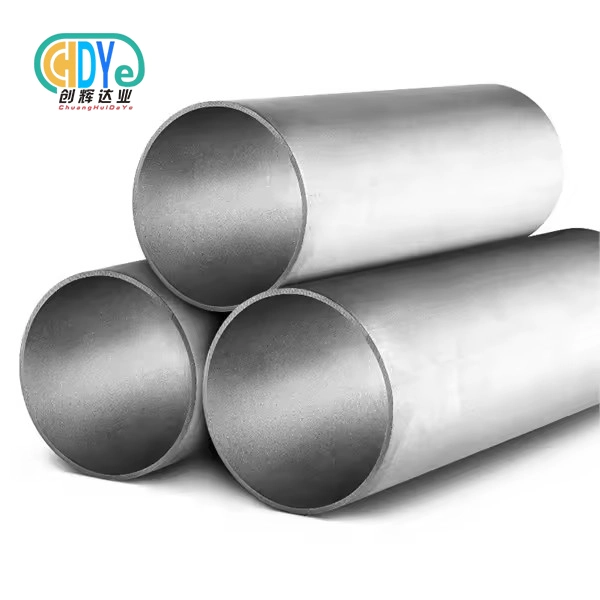
Understanding Titanium Welded Pipes and Their Corrosion Resistance
Titanium welded pipe is made by rolling and welding titanium sheets or strips under exact circumstances. This production approach offers cost-effective manufacturing scalability and a smooth junction that preserves the material's corrosion resistance. To maintain weld integrity and surface quality, TIG or plasma welding is used.
Manufacturing Methods and Grade Classifications
The execution of titanium welded channels depends on various vital generation stages. Shaanxi Chuanghui Daye Metal Fabric Co., Ltd. makes ASTM B338, ASTM B861, and ASME SB-338-compliant channels utilizing cutting-edge TIG and plasma welding. These guidelines ensure quality and execution over applications and environments.
Titanium grades contrast in erosion resistance and mechanical qualities. Review 1 and 2 titanium are corrosion-resistant for ordinary employments, while Review 9 (Ti-3Al-2.5V) is more grounded for harsher circumstances. Application criteria counting temperature, chemical presentation, and mechanical stretch decide review determination.
Corrosion Resistance Mechanisms
Titanium shapes a steady, following oxide layer when uncovered to oxygen, making it corrosion-resistant. Titanium dioxide makes up this inactive layer, which stands up to erosion and self-heals. In chloride settings, stainless steel can involvement localized erosion, while titanium is safe to a more extensive range of chemicals.
A common oxide layer shapes inside microseconds after introduction to oxidizing conditions. The layer's thickness and toughness develop with temperature and time, securing warm exchangers and warm preparing hardware beneath tall temperatures.
Core Benefits of Titanium Welded Pipes in Corrosion Protection
Titanium welded pipes for corrosion protection offer benefits beyond material resistance. These benefits affect operating efficiency, maintenance costs, and system reliability in various industrial applications.
Enhanced Durability in Aggressive Environments
Titanium welded pipes operate well in harsh situations that deteriorate traditional materials. Titanium's acid, alkali, and chlorinated compound resistance benefits chemical processing plants. Titanium's resistance to chloride-induced deterioration is essential for marine applications.
The material excels in acidic settings. Hydrochloric acid solutions pit stainless steel, whereas titanium remains structurally intact. Titanium welded pipes are appropriate for pharmaceutical and food processing applications that require product purity and equipment longevity because they resist organic acids.
Cost Efficiency Through Extended Service Life
Long-term reserve funds from diminished support and expanded working life make titanium welded channels worth the unique consumption. Titanium frameworks can final decades in cruel settings, whereas conventional channeling materials require substitution each 5-10 years.
This drawn out benefit life decreases support and substitution downtime. Without visit channeling framework disappointments, generation offices can work ceaselessly. The financial affect is altogether more prominent when unscheduled shutdowns, crisis repairs, and misplaced generation capacity are considered.
Lightweight Design Advantages
Titanium welded pipes are lighter than other materials despite their corrosion resistance. This benefit is significant during project installation and transportation. The lighter weight facilitates handling, decreases structural support, and lowers project costs.
Weight reduction affects offshore and marine buoyancy calculations and structural design. Titanium's high strength-to-weight ratio allows efficient system designs without compromising performance or safety in aerospace applications.
Titanium Welded Pipes vs. Other Piping Materials: A Comparative Analysis
Understanding how titanium welded pipes compare to other materials helps procurement experts make application-specific and long-term pricing decisions.
Performance Comparison with Stainless Steel
Whereas stainless steel is prevalent for corrosion-resistant applications, titanium welded channels sparkle in numerous conditions. Whereas stainless steel's chromium oxide detached layer stands up to erosion, chloride-rich conditions can cause setting and cleft corrosion.
Titanium can supplant stainless steel in applications that fall flat rashly due to its more extensive chemical resistance range. Stainless steel may erode locally in seawater inside months, though titanium keeps going until the end of time. Titanium is appropriate for high-temperature applications since it is more temperature-resistant than most stainless steel grades.
Carbon Steel and Alloy Limitations
Carbon steel and alloys need protective coatings or cathodic protection systems to last in corrosive conditions. Protection systems increase complexity, maintenance, and operational expenses. Titanium welded pipes lack protection systems but perform better.
Coated steel systems need inspection, coating repair, and refurbishment. These activities disrupt operations and incur continuing costs that may surpass the initial cost reduction of cheaper materials.
Cost-Effectiveness Analysis
Titanium welded pipes cost more than standard materials, but their total cost of ownership is generally lower for difficult applications. Material prices, installation costs, maintenance, replacement frequency, and operational disturbances must be considered.
A complete lifecycle cost analysis shows that titanium welded pipes are often more cost-effective in mild to severe corrosive situations. The break-even point is usually within 10-15 years, beyond which continuing without replacement is economically beneficial.
Manufacturing Process and Quality Considerations for Titanium Welded Pipes
To maximize performance, titanium welded pipe manufacturing requires specialized equipment, trained workers, and stringent quality control. Understanding these processes helps procurement experts evaluate vendors and set quality standards.
Advanced Welding Techniques
Modern titanium welded pipe production uses advanced welding methods to preserve corrosion resistance across the weld zone. TIG welding precisely controls heat input and environment, preventing corrosion-compromising contaminants. Plasma welding improves productivity and weld quality for larger pipes.
To avoid oxygen, nitrogen, and hydrogen contamination, welding requires strict atmospheric control. Argon inert gas shielding covers the weld pool and heat-affected zones during welding. Stress relieving or solution annealing can improve mechanical characteristics and corrosion resistance after welding.
Quality Control and Testing Procedures
Titanium welded pipes fulfill performance criteria after rigorous quality inspection. Ultrasonic and radiographic inspections check weld integrity and find faults. Controlled hydrostatic testing confirms pressure-bearing capabilities.
Material standards fulfill grade and client specifications through chemical composition verification. Mechanical property testing verifies tensile, yield, and elongation. Corrosion testing can check performance in specific applications or settings.
Customization and Specification Options
Modern technology allows titanium welded pipes to be customized for specific applications. From small instrumentation tubing to big process piping, industrial needs are handled. Wall thickness affects pressure ratings for different operating circumstances.
Shaanxi Chuanghui Daye Metal Material Co., Ltd. customizes big diameter titanium welded pipes for particular purposes. For exact customer specifications, the organization may manufacture numerous grades, dimensions, and surface treatments. This customization offers optimal performance and cost-effectiveness for individual applications.
Procurement Guide: Buying Titanium Welded Pipes for Corrosion Protection
Understanding market dynamics, supplier capabilities, and quality assurance requirements is essential for titanium welded pipe procurement. The holistic strategy maximizes value and performance for specific applications.
Pricing Factors and Market Considerations
Titanium welded pipe pricing reflects various interwoven elements that procurement experts must consider when budgeting and assessing suppliers. Titanium prices are driven by worldwide supply chains, mining capacity, and aerospace and industrial demand.
Complex manufacturing requires specialized equipment, expert workers, and quality control, which adds cost. The welding process involves expensive equipment and trained personnel, increasing production costs. Due to production efficiency, larger orders usually get better pricing.
Specifications, quantity, and supplier capabilities affect lead times substantially. Custom specifications take 8-16 weeks to produce and deliver, while standard sizes and grades may be in stock. Planning purchase tasks in advance ensures timely delivery and may improve pricing.
Supplier Selection and Evaluation Criteria
Multiple aspects beyond price must be considered while choosing providers. Manufacturing must meet technical needs including size ranges, grade alternatives, and customization flexibility. ISO 9001:2015 certifications demonstrate systematic quality management and continual improvement.
Superior vendors offer technical support. Metalurgical expertise, application engineering support, and problem-solving contribute value throughout project lifecycles. After 30 years in the rare metal sector, Shaanxi Chuanghui Daye Metal Material Co., Ltd. provides complete technical support for challenging applications.
Geography impacts logistics, communication, and relationships. Global sourcing offers specialist suppliers and reasonable pricing, but communication and quality assurance are crucial. Established vendors with worldwide experience usually provide better performance and support.
Quality Assurance and Documentation Requirements
Comprehensive documentation and quality assurance safeguard procurement investments and regulatory compliance. Material test reports (MTRs) verify chemical composition, mechanical qualities, and production standards. These documents are necessary for equipment certification and regulatory submissions.
Traceability documentation supports quality investigations and regulatory needs by tracking source materials to completed products. Complete records aid maintenance planning and warranty claims. Advanced suppliers use electronic documentation systems to quickly retrieve previous data and fulfill technical requirements.
Conclusion
For applications requiring high corrosion protection, mechanical dependability, and long-term economic value, titanium welded pipes are best. The combination of corrosion resistance, lightweight, and extended service life makes it superior to conventional piping materials. Initial investment prices are higher than other materials, however titanium's total cost of ownership analysis favors it for harsh environmental applications. Effective supplier selection, grade definition, and quality assurance are needed for implementation. Titanium welded pipe technique reduces maintenance, extends service intervals, and improves system reliability.
FAQ
Q: What types of corrosion do titanium welded pipes resist most effectively?
A: Titanium welded pipes demonstrate exceptional resistance to multiple corrosion mechanisms, including general corrosion, pitting corrosion, crevice corrosion, and stress corrosion cracking. The material's passive oxide layer provides protection against chloride-induced corrosion, acid attack, and galvanic corrosion when coupled with dissimilar metals. This broad spectrum resistance makes titanium suitable for applications ranging from seawater systems to chemical processing equipment.
Q: How does the welding process affect corrosion resistance in titanium pipes?
A: Proper welding techniques maintain the corrosion resistance characteristics of titanium throughout the weld zone and heat-affected areas. Modern TIG and plasma welding processes, when performed under controlled atmospheric conditions, preserve the material's ability to form protective oxide layers. Post-weld treatments may enhance corrosion resistance by optimizing microstructure and eliminating residual stresses that could compromise performance.
Q: What factors should be considered when choosing between welded and seamless titanium pipes?
A: The choice between welded and seamless titanium pipes depends on application requirements, cost considerations, and availability factors. Welded pipes offer cost advantages for larger diameters and provide excellent performance for most applications. Seamless pipes may be preferred for high-pressure applications or where absolute uniformity is required. Both options provide excellent corrosion resistance when manufactured to appropriate standards and specifications.
Q: How do temperature variations affect the corrosion resistance of titanium welded pipes?
A: Titanium welded pipes maintain excellent corrosion resistance across wide temperature ranges, from cryogenic conditions to elevated temperatures approaching 600°C. Higher temperatures actually enhance the formation and stability of the protective oxide layer, improving corrosion resistance in many environments. However, extreme temperatures may require specific grade selection and design considerations to ensure optimal performance.
Q: What maintenance requirements are associated with titanium welded pipe systems?
A: Titanium welded pipe systems require minimal maintenance compared to conventional materials. Routine inspection and cleaning procedures suffice for most applications, with no need for protective coating maintenance or cathodic protection systems. The self-healing nature of titanium's oxide layer eliminates concerns about coating damage or degradation over time.
Partner with Chuanghui Daye for Superior Titanium Welded Pipe Solutions
Shaanxi Chuanghui Daye Metal Material Co., Ltd. stands ready to support your corrosion protection requirements with premium titanium welded pipe solutions. Located in China's renowned "Titanium Capital" of Baoji, our company combines over three decades of rare metal expertise with advanced manufacturing capabilities and ISO 9001:2015 certified quality systems. We specialize in custom titanium welded pipe fabrication using state-of-the-art TIG and plasma welding technology, ensuring superior weld integrity and corrosion resistance for your most challenging applications. Contact our team at info@chdymetal.com to discuss your specific requirements and discover how our titanium welded pipe manufacturer capabilities can enhance your operational efficiency and reduce long-term costs.
References
1. American Society for Testing and Materials. "Standard Specification for Seamless and Welded Titanium and Titanium Alloy Tubes for Condensers and Heat Exchangers." ASTM B338-18, West Conshohocken, PA, 2018.
2. Boyer, R., Welsch, G., and Collings, E.W. "Materials Properties Handbook: Titanium Alloys." ASM International, Materials Park, Ohio, 1994.
3. Cotton, J.D. and Briggs, R.D. "Corrosion Resistance of Titanium in Industrial Process Applications." Materials Performance, Vol. 42, No. 3, 2003, pp. 34-38.
4. Lutjering, G. and Williams, J.C. "Titanium: Engineering Materials and Processes." Springer-Verlag, Berlin, Germany, 2007.
5. Schutz, R.W. and Thomas, D.E. "Corrosion of Titanium and Titanium Alloys in Marine Environments." Corrosion Engineering, Science and Technology, Vol. 22, No. 4, 1987, pp. 297-320.
6. American Society of Mechanical Engineers. "Specification for Seamless and Welded Titanium and Titanium Alloy Tubes for Condensers and Heat Exchangers." ASME SB-338-19, New York, NY, 2019.
Learn about our latest products and discounts through SMS or email