- English
- French
- German
- Portuguese
- Spanish
- Russian
- Japanese
- Korean
- Arabic
- Greek
- German
- Turkish
- Italian
- Danish
- Romanian
- Indonesian
- Czech
- Afrikaans
- Swedish
- Polish
- Basque
- Catalan
- Esperanto
- Hindi
- Lao
- Albanian
- Amharic
- Armenian
- Azerbaijani
- Belarusian
- Bengali
- Bosnian
- Bulgarian
- Cebuano
- Chichewa
- Corsican
- Croatian
- Dutch
- Estonian
- Filipino
- Finnish
- Frisian
- Galician
- Georgian
- Gujarati
- Haitian
- Hausa
- Hawaiian
- Hebrew
- Hmong
- Hungarian
- Icelandic
- Igbo
- Javanese
- Kannada
- Kazakh
- Khmer
- Kurdish
- Kyrgyz
- Latin
- Latvian
- Lithuanian
- Luxembou..
- Macedonian
- Malagasy
- Malay
- Malayalam
- Maltese
- Maori
- Marathi
- Mongolian
- Burmese
- Nepali
- Norwegian
- Pashto
- Persian
- Punjabi
- Serbian
- Sesotho
- Sinhala
- Slovak
- Slovenian
- Somali
- Samoan
- Scots Gaelic
- Shona
- Sindhi
- Sundanese
- Swahili
- Tajik
- Tamil
- Telugu
- Thai
- Ukrainian
- Urdu
- Uzbek
- Vietnamese
- Welsh
- Xhosa
- Yiddish
- Yoruba
- Zulu
Why Choose GR4 Titanium Bar for Corrosion Resistance?
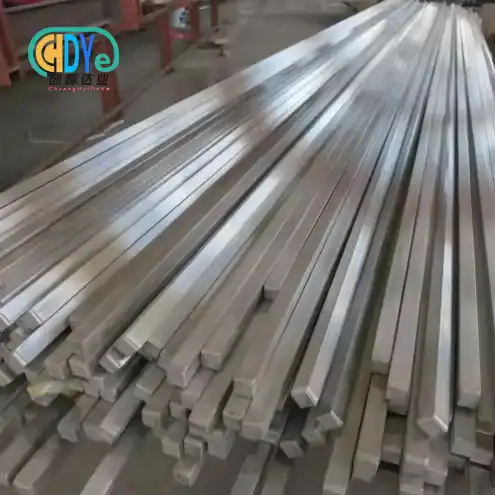
If you're looking for materials that can handle harsh chemical conditions, the gr4 titanium bar is the best commercially pure titanium grade to choose. This substance has the highest level of unalloyed titanium strength,gr4 titanium bar with a tensile strength of about 550 MPa. It also has the great corrosion protection that pure titanium is known for. When it comes to choosing industrial materials, Grade 4 titanium bars fill a very important gap: they are strong enough for high-load situations without sacrificing their chemical stability, which is important in toxic environments. Unlike lower grades that might not be strong enough or expensive metals that might not be biocompatible, Grade 4 finds the best balance by controlling the amount of oxygen and iron it contains instead of using complicated alloying elements.
Understanding GR4 Titanium Bar: Properties and Composition
What Makes Grade 4 Titanium Unique
As per international standards like ASTM B348 and ASME SB348, the gr4 titanium bar is a member of the economically pure (CP) titanium family and is known as UNS R50700. The interstitial element material in this grade is carefully controlled, which makes it different from Grades 1, 2, and 3. The material has up to 0.40% oxygen and up to 0.50% iron. These two elements work together to make it stronger without the need for extra alloying elements like vanadium or aluminium. This alpha-phase solid solution structure has amazing qualities that make it perfect for harsh settings where strength and resistance to corrosion are essential. At Shaanxi Chuanghui Daye Metal Material Co., Ltd., our factory in Baoji, which is known as China's "Titanium Capital," we make Grade 4 titanium bars that meet strict international standards. Our products have a minimum tensile strength of 550 MPa, a yield strength of 480 MPa, and an elongation of 15%, which is much higher than what Grade 2 can do and better at resisting corrosion than many alloyed options.
Chemical Composition and Mechanical Advantages
Grade 4 titanium's controlled makeup makes a material profile that solves certain problems in industry. The higher oxygen content makes the material stronger through interstitial solid solution hardening. This increases the material's ability to hold weight without the problems that come with standard alloying methods. With this composition approach, the density is about 4.51 g/cm³, which is 45% lighter than stainless steel 316 while giving the same or better performance in chloride-rich environments. Our Gr4 titanium bar goods have consistent mechanical properties across a wide range of temperatures. They keep their structural integrity at high temperatures where other materials might break down. Because Grade 4 titanium is thermally stable and doesn't wear down easily, it is especially useful in situations where it is loaded and unloaded repeatedly or when the temperature changes. The melting point of the material is around 1668°C, which gives it a lot of room to work in high-temperature situations. However, Grade 4 is usually gr4 titanium bar used well below this temperature range to get the most service life.
Why Corrosion Resistance is Critical in Industrial Applications
The True Cost of Corrosion in B2B Operations
Corrosion is one of the most harmful things to the global economy, affecting industrial processes. The National Association of Corrosion Engineers says that corrosion costs more than 3% of the world's GDP every year. A big chunk of these costs is due to equipment breaking down early, unplanned downtime, and safety issues. One corroded heat exchanger in a chemical processing plant can stop output for several days, which costs hundreds of thousands of dollars every day. When aerospace parts are exposed to marine environments, they break down faster, which lowers safety margins and requires expensive inspection methods. The cost effects go beyond the direct cost of replacement. Corroded parts often need to be bought quickly and at a higher cost, and they also need extra work to be done when upkeep isn't planned. These costs that keep adding up can easily make the total material cost three to five times bigger. Choosing materials that don't rust, like Grade 4 titanium bars, when you buy something for the first time is a smart move that will save you a lot of money over the life of the tools.
How Grade 4 Titanium Resists Aggressive Environments
When air or water comes in contact with the gr4 titanium bar, it forms a stable, protective titanium dioxide (TiO₂) passive layer. This is what makes it so resistant to corrosion. This oxide film, which is only a few nanometres thick, protects against chemical attack and grows back right away if it gets destroyed. Protective coatings can chip or wear through, but this passive layer is an essential part of the titanium surface chemistry and provides long-lasting protection that doesn't need to be maintained.It is amazing how well grade 4 titanium resists a wide range of toxic substances. Grade 4 titanium bars work much better than stainless steel grades, even 316L, in oxidising acids, chloride solutions, seawater, and many chemical compounds. The substance is resistant to pitting and crevice corrosion, which are common ways for stainless steel to break down in chloride settings. This resistance lasts at high temperatures, which is higher than the attack rates of many other materials. In situations where stainless steel parts need to be replaced every 2 to 5 years, chemical processing equipment made from Grade 4 titanium often lasts longer than 20 years.
GR4 Titanium Bar vs Other Materials: Making an Informed Choice
Grade 4 Compared to Grade 2 Titanium
It is important to note that both Grade 2 and Grade 4 are made of commercially pure titanium and have great corrosion protection. The main difference is in mechanical strength; Grade 4 has about 60% higher tensile strength because it has more oxygen in it. This difference in strength lets designers make better designs by using thinner materials or smaller parts while keeping the same load capacity. Buying choices between these grades are often based on the needs of the specific application. Grade 2 is still the most cost-effective option for uses where its 345 MPa tensile strength is enough, and the more flexible material is needed for shaping. However, when part size, weight, or load-bearing ability become issues, the gr4 titanium bar becomes the best choice, even though it costs a little more. Being able to reduce the size of parts often makes up for the difference in price while also lowering the cost of production by using less material.
Grade 4 Versus Stainless Steel Alternatives
Stainless steel 316L is the standard grade of corrosion-resistant steel that is used in many businesses. In many situations, 316L works well enough, but it has big problems in chloride-rich settings, where stress corrosion cracking and pitting become problems. These types of failure don't happen at all with grade 4 titanium bars, which are completely reliable in seawater, brine solutions, gr4 titanium bar and chlorine process streams. When you compare the weights of these materials, Grade 4 titanium stands out as the clear winner. Titanium is about 45% less dense than 316L stainless steel, so it can be used to make parts that are much lighter. This is useful in places where weight affects performance, like in flight structures, offshore equipment, and portable instruments. This reduction in weight means better fuel economy, easier handling, and less need for structural support. When you combine titanium's better resistance to corrosion with its lighter weight, you can often justify its higher material cost by creating lifetime value and improving performance in ways that steel alternatives can't.
Procurement Insights: How to Source Quality GR4 Titanium Bars
Critical Certifications and Quality Standards
The best way to buy Gr4 titanium bars is to check the certifications and safety paperwork that come with the materials. Material Test Reports (MTRs) from reputable sources show chemical composition analysis, mechanical property testing, and the ability to track back to production lots. The relevant standards should be mentioned in these approvals, such as ASTM B348, ASME SB348, and ASTM F-67 for medical uses. The documentation trail makes sure that the materials are real and gives regulated businesses the quality assurance they need. Getting ISO 9001:2015 certification from a seller shows that they are dedicated to quality management systems that cover the whole production process. When we get ISO certification for Chuanghui Daye, it covers checking the raw materials, melting and forging, machining, and final inspection procedures. This methodical approach makes sure that the standard of the products is always the same, and customers can be sure that every delivery meets their needs. Buyers should not only make sure that certifications exist, but also that they are up-to-date and cover the goods they want to buy.
Evaluating Supplier Capabilities and Reliability
Supplier selection includes more than just the specifications of the materials. It also includes the supplier's ability to make the goods, their technical help, and the reliability of the supply chain. Effective suppliers keep enough stock on hand to support fast shipping and also let customers make changes for non-standard sizes or tight tolerances. Custom machining services, such as precision turning, milling, and thread cutting, add a lot of value because the buyer doesn't have to arrange with multiple vendors to get finished parts. Suppliers who work as strategic partners have technical support skills that set them apart from those who only do business with you. Having access to metallurgical experts helps buyers choose the best materials and process settings for each application. Suppliers with a lot of experience in the field can suggest changes to the design that make it easier to make or other ways to do things that are cheaper without sacrificing performance. This ability to provide advice is especially useful when making new products or changing current designs to gr4 titanium bar work in different settings.
Maximising Benefits of GR4 Titanium Bars in Your Projects
Optimal Processing and Fabrication Techniques
Machining Grade 4 titanium requires specific techniques to achieve optimal results and tool life. The material's strength and relatively low thermal conductivity create challenges, including work hardening and heat buildup during cutting operations. Sharp carbide cutting tools with appropriate geometries prove essential, as dull tools exacerbate work hardening and accelerate tool wear. Generous coolant application—often 10-20 times the volume used for steel machining—manages heat effectively while flushing chips that might otherwise interfere with cutting action. Cutting speeds for Grade 4 titanium typically range 40-60% of those used for mild steel, with feed rates adjusted to maintain continuous chip formation rather than intermittent cutting that promotes work hardening. Climb milling rather than conventional milling reduces cutting forces and improves surface finish. These processing considerations require experienced machinists or careful process development, though the resulting components deliver performance impossible with alternative materials. Welding Grade 4 titanium produces excellent results when proper procedures protect the weld zone from atmospheric contamination.
Storage and Handling Best Practices
Grade 4 titanium's corrosion resistance extends to storage environments, though basic precautions preserve material cleanliness and prevent surface contamination. Clean, dry storage areas protected from industrial fallout and chemical exposure maintain material condition indefinitely. Unlike steel products requiring rust prevention measures, titanium bars need no protective coatings or controlled atmosphere storage. Simple segregation from dissimilar metals prevents galvanic corrosion concerns during subsequent fabrication. Handling procedures should prevent surface damage that might create stress concentrations in finished components. While titanium's oxide layer resists chemical attack, mechanical damage from dropping or rough handling can create surface imperfections requiring additional machining allowance. Nylon slings or padded lifting fixtures protect surface finish during material handling operations. These straightforward precautions ensure that the material condition at fabrication matches the quality provided by the supplier.
Conclusion
Selecting the appropriate material for corrosion-critical applications determines project success, operational costs, and long-term reliability. The gr4 titanium bar delivers an exceptional combination of mechanical strength, corrosion resistance, and weight efficiency that addresses challenges across aerospace, chemical processing, medical, and emerging technology sectors. Its position as the strongest commercially pure titanium grade provides design flexibility unavailable with lower grades, while maintaining the biocompatibility and chemical resistance that distinguish pure titanium from alloyed alternatives. Effective procurement requires partnering with suppliers who demonstrate technical expertise, quality certifications, and manufacturing capabilities matched to project requirements. Material certifications, processing flexibility, and responsive technical support transform supplier relationships from transactional exchanges into strategic partnerships that contribute to project optimisation and problem-solving.
FAQ
1. What specific properties make Grade 4 titanium superior for corrosion resistance?
Grade 4 titanium forms a stable, self-healing titanium dioxide passive layer that provides exceptional resistance across acidic, alkaline, and chloride environments. This oxide film regenerates instantly if damaged, offering permanent protection without maintenance or coating requirements.
2. Can Grade 4 titanium bars be customised for specific project requirements?
Comprehensive customisation options include a diameter range from 6.0mm to 200mm, lengths from 1000mm to 6000mm, precision tolerances, and custom machining services. Suppliers like Chuanghui Daye provide turned, ground, and threaded configurations tailored to application specifications.
3. What certifications should buyers verify when sourcing Grade 4 titanium?
Essential certifications include ASTM B348 and ASME SB348 compliance documentation, Material Test Reports confirming chemical composition and mechanical properties, and ISO 9001:2015 quality management certification. Medical applications require ASTM F-67 compliance verification.
4. How does Grade 4 compare economically to stainless steel alternatives?
While initial material cost exceeds stainless steel pricing, Grade 4 titanium delivers superior lifecycle value through extended service life, elimination of corrosion-related failures, and weight reduction benefits. Total cost of ownership calculations frequently favour titanium in demanding applications.
Partner with Chuanghui Daye for Your Grade 4 Titanium Bar Requirements
Shaanxi Chuanghui Daye combines over three decades of rare metal industry expertise gr4 titanium bar with ISO 9001:2015 certified manufacturing processes to deliver gr4 titanium bar products meeting the most demanding specifications. Our Baoji facility provides complete capabilities from raw material melting through precision machining, ensuring quality control throughout production. We maintain an extensive inventory of standard configurations while offering customisation services for specialised requirements. Whether you need prototype quantities for research applications or production volumes for ongoing manufacturing, our technical team provides responsive support and competitive factory-direct pricing. Contact us at info@chdymetal.com to discuss your project requirements with our experienced Gr4 titanium bar supplier team and discover how proper material selection transforms product performance and operational reliability.
References
1. American Society for Testing and Materials. "Standard Specification for Titanium and Titanium Alloy Bars and Billets." ASTM B348-13, West Conshohocken, PA, 2013.
2. Donachie, Matthew J. "Titanium: A Technical Guide, 2nd Edition." ASM International, Materials Park, OH, 2000.
3. Lütjering, Gerd and Williams, James C. "Titanium: Engineering Materials and Processes, 2nd Edition." Springer-Verlag Berlin Heidelberg, 2007.
4. Schutz, R.W. and Thomas, D.E. "Corrosion of Titanium and Titanium Alloys." ASM Handbook Volume 13B: Corrosion: Materials, ASM International, 2005.
5. Boyer, R., Welsch, G., and Collings, E.W. "Materials Properties Handbook: Titanium Alloys." ASM International, Materials Park, OH, 1994.
6. Peters, M., Kumpfert, J., Ward, C.H., and Leyens, C. "Titanium Alloys for Aerospace Applications." Advanced Engineering Materials, Volume 5, Issue 6, 2003.
Learn about our latest products and discounts through SMS or email