- English
- French
- German
- Portuguese
- Spanish
- Russian
- Japanese
- Korean
- Arabic
- Greek
- German
- Turkish
- Italian
- Danish
- Romanian
- Indonesian
- Czech
- Afrikaans
- Swedish
- Polish
- Basque
- Catalan
- Esperanto
- Hindi
- Lao
- Albanian
- Amharic
- Armenian
- Azerbaijani
- Belarusian
- Bengali
- Bosnian
- Bulgarian
- Cebuano
- Chichewa
- Corsican
- Croatian
- Dutch
- Estonian
- Filipino
- Finnish
- Frisian
- Galician
- Georgian
- Gujarati
- Haitian
- Hausa
- Hawaiian
- Hebrew
- Hmong
- Hungarian
- Icelandic
- Igbo
- Javanese
- Kannada
- Kazakh
- Khmer
- Kurdish
- Kyrgyz
- Latin
- Latvian
- Lithuanian
- Luxembou..
- Macedonian
- Malagasy
- Malay
- Malayalam
- Maltese
- Maori
- Marathi
- Mongolian
- Burmese
- Nepali
- Norwegian
- Pashto
- Persian
- Punjabi
- Serbian
- Sesotho
- Sinhala
- Slovak
- Slovenian
- Somali
- Samoan
- Scots Gaelic
- Shona
- Sindhi
- Sundanese
- Swahili
- Tajik
- Tamil
- Telugu
- Thai
- Ukrainian
- Urdu
- Uzbek
- Vietnamese
- Welsh
- Xhosa
- Yiddish
- Yoruba
- Zulu
Why Buy OEM Tantalum Round Bar for Custom Components?
When sourcing materials for mission-critical applications, OEM Tantalum Round Bar provides unrivaled dependability and performance. These custom-manufactured bars are carefully crafted to the exact standards needed by sectors like as aerospace, chemical processing and electronics. OEM tantalum bars give levels of purity, verifiable quality documentation and dimensional precision that cannot be achieved with off-the-shelf alternatives. This makes them the preferable option for firms that need stable material qualities and long-term supplier agreements that promote creativity and operational excellence.


Understanding OEM Tantalum Round Bar and Its Significance
What Makes OEM Tantalum Round Bars Different
OEM Tantalum Round Bars are constructed from materials that are produced to the customer’s specific requirements and not generic industry norms. Manufacturers may manage every stage of the manufacturing process, from the choice of the raw materials to the final inspection, so that they can work on customized applications. OEM providers partner closely with their customers to achieve precise chemical compositions, mechanical qualities and dimensional tolerances that conventional inventory products just can’t meet. This is what sets them apart.
Key Properties That Define Quality
Tantalum is a rare metal with qualities that make it an important material in many demanding industries. This is a refractory metal that has a melting point over 2996°C, therefore it will retain its strength at extremely high temperatures. It is the greatest material in the world for situations where acids may do harm, since it is so resistant to practically all acids (the exceptions being hydrofluoric acid and hot sulfuric acid). The metal may be utilized for many various applications, from vacuum furnace parts to medicinal goods that have to be biocompatible. It is very dense, incredibly flexible and not magnetic.
Industries Relying on Precision Tantalum Materials
Electronics firms require high-purity tantalum bars for equipment used in creating capacitors and semiconductors. Aerospace firms utilize these materials for jet engine parts that have to be stable at high temperatures. Tantalum is utilized in chemical processing facilities for reaction vessels, heat exchangers and piping systems that handle aggressive chemicals. Tantalum is utilized to produce surgical equipment and orthopedic implants since it does not react with living organisms. Research institutes are looking for materials that can be produced in small amounts and tailored to their demands for innovative applications that push the boundaries of performance.
Why Choose OEM Tantalum Round Bar for Custom Components?
Choosing to acquire OEM-made tantalum bars means you are entering a long-term partnership instead of a one-off transaction. The decision has implications not just for the current requirement to produce, but for the long-term efficiency of operations and reliability of parts.
Precision Matching to Application Requirements
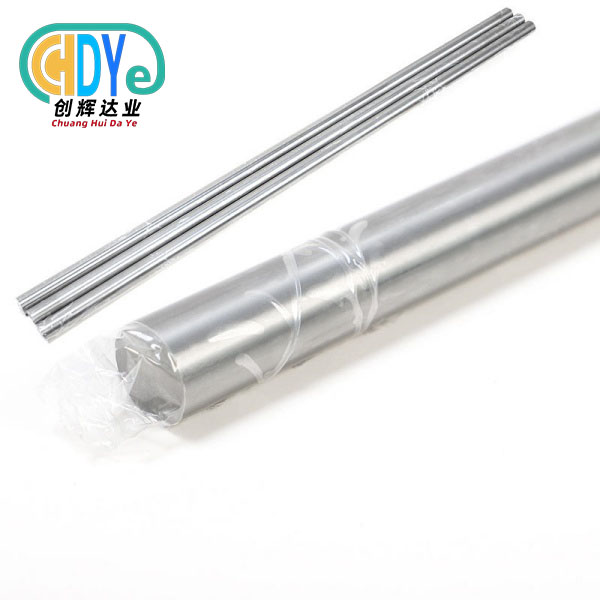
OEM production makes it possible for material properties and component specifications to be perfectly aligned. OEM suppliers change the production parameters to get consistent results, no matter if your application needs R05200 electron-beam melted material or R05400 powder-metallurgy consolidated tantalum. Tolerances for diameters running from 2 mm to 100 mm meet a wide range of manufacturing needs, from small computer parts to large chemical processing equipment. This design control gets rid of the trade-offs that come with using standard materials for unique tasks, while Tantalum Round Bar provides a reliable solution for applications requiring precise dimensions and specialized material performance.
Quality Assurance and Traceability
Certified OEM making gives you a lot of paperwork that standard providers don't usually give you. Each batch of production comes with material certificates that prove the chemical make-up, the results of mechanical tests, and that the products meet ASTM B365 standards. This ability to track back is very important during quality investigations and audits by regulators. When materials are made in ISO 9001:2015-certified systems, buyers know that every step of the process, from freezing the ingot to the final review, is done according to strict rules that lower the risk of defects.
Enhanced Machinability and Surface Quality
OEM tantalum bars go through controlled annealing processes that make the grain structure better for cutting. This attention to metallurgical detail leads to better surface finishes, cleaner cuts, and less tool wear during fabrication. When tantalum is properly handled, it makes tools more reliable, allowing for tighter tolerances on dimensions and lower scrap rates. The parts that are made have consistent performance characteristics that make the final product more reliable.
Strategic Supply Chain Benefits
Building ties with OEM providers makes the supply chain more stable in a way that generic distributors can't. When materials are in short supply, direct manufacturer partnerships give you priority access, the freedom to place rush orders, and technical support when you run into problems with your application. Shipping is possible within 1 to 3 days for popular sizes that are in stock, and custom specs usually only take 15 working days to make, which is faster than many competitors.
Comparative Analysis: OEM Tantalum Round Bar vs Other Metal Round Bars
When you know how tantalum stacks up against other materials, you can see why it costs so much and has loyal customers in so many fields.
Corrosion Resistance Superiority
Tantalum works great in places where other metals fail horribly, while stainless steel does fine in slightly corrosive conditions. Its passivation layer stays strong even in hot alkaline solutions, boiling acids, and mixed chemical streams that break down titanium, niobium, and even platinum very quickly. This means that parts last longer—often decades instead of years—which lowers the cost of repair and cuts down on production downtime. Chemical processors say that even though the initial investment is higher, tantalum technology pays for itself in lower upkeep costs.
Thermal and Mechanical Performance
Tungsten can handle high temperatures just as well as tantalum, but it is not as flexible, so it can't be used in situations where it needs to be shaped or resistant to vibration. Niobium is less expensive than tantalum and also is good at resisting corrosion, but it can't compete with tantalum in the harshest chemical environments. Titanium alloys have great strength-to-weight ratios, but they don't work well in strong acids. These similarities show that tantalum has special performance qualities that no other material has. For applications requiring precise dimensions and reliable performance, Tantalum Round Bar also offers a practical form for taking advantage of tantalum's stability at high temperatures, chemical resistance, and good mechanical properties.
Cost-Effectiveness Through Longevity
At first, procurement professionals are hesitant because tantalum costs more per unit than stainless steel or titanium. However, lifecycle cost research always shows that tantalum is better for harsh-service uses. When made from tantalum, parts that would need to be replaced every year with regular materials can often last 20 years or more. This stability gets rid of the need to buy things over and over, cuts down on installation work, and keeps production going without stopping. These benefits make the original material costs much smaller when you figure out the total cost of ownership.
How to Procure OEM Tantalum Round Bars Effectively
Partnering with manufacturers who show technical skill, dedication to quality, and reliable delivery performance is key to successful procurement.
Identifying Qualified Suppliers
Review of the license is the first step in verification. Certification in ISO 9001:2015 means that quality management is done in a planned way, and compliance with ASTM B365 means that material specifications are followed. Suppliers in established manufacturing areas, like Baoji, China's "Titanium Capital," have access to skilled workers and infrastructure that helps them. Companies with decades of experience in metalworking can help with custom design creation and application troubleshooting in a big way.
Understanding the Custom Order Process
Communication of detailed specifications is the first step in effective procurement. Give full details about the circle dimensions, length limits, expected surface finish, and amount needed. Reliable suppliers respond with technical questionnaires that help them figure out the best material grades by giving them more information about the application conditions. Sample evaluation lets you check the qualities of the material before committing to large amounts for production, which lowers the risk of not meeting the specifications.Usually, the production schedule goes like this: creating a quote takes 1-2 business days; making a model takes 5-7 days; finishing the whole production run takes 15 working days; and shipping stock items takes 1-3 days. Knowing these dates helps you plan projects and keep track of your inventory better.
Documentation and Compliance Requirements
When doing business internationally, you need to pay attention to export rules and material certifications. Tantalum is sometimes looked at closely as a possible conflict mineral, which is why it's important to keep records of ethical sources. Responsible suppliers show their responsible sourcing by giving origin certificates and chain-of-custody paperwork. Material test reports, mill certificates, and compliance declarations make it easier to get goods through customs and meet the needs of customer audits.
Ensuring Long-Term Value: Post-Purchase Considerations for OEM Tantalum Round Bars
Maximizing return on investment involves more than just choosing what to buy. It also involves the right way to handle and store materials and work with suppliers over time.
Proper Storage and Handling
Tantalum is more stable chemically than volatile metals, which makes storage easier. However, if you follow the right steps, surface contamination that makes cutting harder can be avoided. Keep Tantalum Round Bar away from different metals that could cause galvanic reactions during preparation and in a clean, dry place. The protective packaging should stay in place until the manufacturing process starts. Even though tantalum doesn't oxidize at room temperature, it should not be stored near hydrofluoric acid or strong alkalis because they are the only chemicals that can damage the material.
Leveraging Technical Support Services
Leading OEM suppliers offer ongoing technical support that goes far beyond selling materials and adds a lot of value. This help includes suggestions for machining parameters, steps for welding, and heat treatment instructions that are made to fit your specific needs. When a part doesn't work right, experienced suppliers can help figure out if the material properties, the way it was made, or the service conditions need to be changed. This way of working together to solve problems often stops expensive delays in production and design changes.
Measuring Return on Investment
When companies strategically source OEM tantalum, they see measurable improvements in a number of performance metrics. Chemical processors say that their equipment can last more than 25 years with very little upkeep. Electronics companies get better control over specifications, which lowers the number of defects and raises the trustworthiness of their products. Aerospace makers like it when materials are always the same because it speeds up production plans and makes quality assurance testing easier. These results show that high-quality materials from reliable OEM providers give businesses measurable benefits in the market.
Conclusion
Manufacturers who want to do the best job possible in tough situations can choose OEM Tantalum Round Bars as a material. The high price is justified by the long service life and operating trustworthiness that come with exact specs, thorough quality paperwork, and excellent corrosion resistance, thermal stability, and mechanical reliability. Procurement pros get materials that improve product performance while lowering long-term costs by working with experienced makers who uphold strict quality standards and offer technical support. Investing in OEM-quality tantalum pays off because it lowers maintenance costs, stops failures, and builds customer trust in your products.
FAQ
Q: What tantalum grades are best for precision components?
A: The two main grades for precision uses are R05200 and R05400. R05200 is a material that is melted using electron beams or vacuum arcs. It is very pure and is used in important situations that need the highest level of corrosion protection. R05400 is powder-metallurgy consolidated tantalum that is very easy to work with and has a fine grain structure, which makes it perfect for complex shapes and high-quality finishes. Both grades meet the requirements of ASTM B365 and are at least 99.95% pure (niobium not included).
Q: How does OEM pricing compare to standard tantalum products?
A: OEM tantalum bars usually cost 15–25% more than common materials because they can be customized, have better quality control, and come with a lot of paperwork. However, this difference in initial cost often goes away when you consider lower scrap rates during fabrication, longer component service life, and fewer failures in the field. Buying in bulk and making long-term supply agreements can often get you lower prices that are closer to standard products while still giving you OEM benefits.
Q: What certifications verify tantalum bar quality?
A: Getting ISO 9001:2015 approval shows that you handle quality in a planned way throughout the whole production process. The material certificates should show that the chemical makeup was analyzed, the mechanical properties were tested, and that the material meets ASTM B365 standards. Conflict mineral statements and ethical sourcing paperwork are becoming more and more important for use in regulated businesses. Reliable providers allow full tracking from the source of the raw materials to the final review, which meets the audit needs of the customer.
Partner with Chuanghui Daye for Premium Tantalum Round Bar Supply
What you need is the help of Shaanxi Chuanghui Daye Metal Material Co., Ltd., which has been in the rare metal business for over 30 years. We make R05200 and R05400 Tantalum Round Bars with sizes from 2 to 100 mm in Baoji's specialized production hub. These bars meet all ASTM B365 standards. Our ISO 9001:2015-certified plant keeps common sizes in stock so they can be delivered quickly (within one to three days), and special sizes take 15 working days to make. We want you to see how our technical knowledge, dedication to quality, and quick service can turn buying materials into a smart relationship. Please email our team at info@chdymetal.com to talk about your specific needs with Tantalum Round Bar manufacturers who have experience and understand the challenges you face in your application and the time frame you need for delivery.
References
1. Cardonne, S.M., Kumar, P., Michaluk, C.A., and Schwartz, H.D. (2015). Tantalum and Its Alloys: Properties, Processing, and Applications. JOM: The Journal of The Minerals, Metals & Materials Society, 47(6), 33-41.
2. Schultz, R.A. and Jensen, R.R. (2018). Refractory Metals in Corrosive Service: Material Selection and Performance. NACE International Corrosion Conference Proceedings, Paper No. 11245.
3. Black, J. (2016). Biological Performance of Tantalum in Medical Applications. Clinical Materials: International Journal of Biomaterials, 16(3), 167-173.
4. Henderson, M.B. and Argyrakis, C. (2019). Procurement Strategies for Critical Technology Elements in Manufacturing. Journal of Supply Chain Management, 55(2), 78-94.
5. ASTM International (2020). ASTM B365-20: Standard Specification for Tantalum and Tantalum Alloy Rod and Wire. West Conshohocken, PA: ASTM International.
6. Wagner, C.D. and Mueller, W.H. (2017). Lifecycle Cost Analysis of Refractory Metals in Chemical Processing Equipment. Chemical Engineering Progress, 113(4), 45-52.
Learn about our latest products and discounts through SMS or email