- English
- French
- German
- Portuguese
- Spanish
- Russian
- Japanese
- Korean
- Arabic
- Greek
- German
- Turkish
- Italian
- Danish
- Romanian
- Indonesian
- Czech
- Afrikaans
- Swedish
- Polish
- Basque
- Catalan
- Esperanto
- Hindi
- Lao
- Albanian
- Amharic
- Armenian
- Azerbaijani
- Belarusian
- Bengali
- Bosnian
- Bulgarian
- Cebuano
- Chichewa
- Corsican
- Croatian
- Dutch
- Estonian
- Filipino
- Finnish
- Frisian
- Galician
- Georgian
- Gujarati
- Haitian
- Hausa
- Hawaiian
- Hebrew
- Hmong
- Hungarian
- Icelandic
- Igbo
- Javanese
- Kannada
- Kazakh
- Khmer
- Kurdish
- Kyrgyz
- Latin
- Latvian
- Lithuanian
- Luxembou..
- Macedonian
- Malagasy
- Malay
- Malayalam
- Maltese
- Maori
- Marathi
- Mongolian
- Burmese
- Nepali
- Norwegian
- Pashto
- Persian
- Punjabi
- Serbian
- Sesotho
- Sinhala
- Slovak
- Slovenian
- Somali
- Samoan
- Scots Gaelic
- Shona
- Sindhi
- Sundanese
- Swahili
- Tajik
- Tamil
- Telugu
- Thai
- Ukrainian
- Urdu
- Uzbek
- Vietnamese
- Welsh
- Xhosa
- Yiddish
- Yoruba
- Zulu
What Industries Use Titanium Welding Wire Most?
Five main industries use titanium welding wire in very important ways: aerospace and defense manufacturing, medical device production, chemical and petroleum processing, marine engineering, and high-performance car. Titanium filling metals are used in these fields because they have a high strength-to-weight ratio, are very resistant to rust, and are biocompatible. Titanium welding materials are mostly used in the aerospace industry to make jet engine parts and structural assemblies that can withstand high temperatures and mechanical stress while still being light, which is important for saving fuel and improving performance.
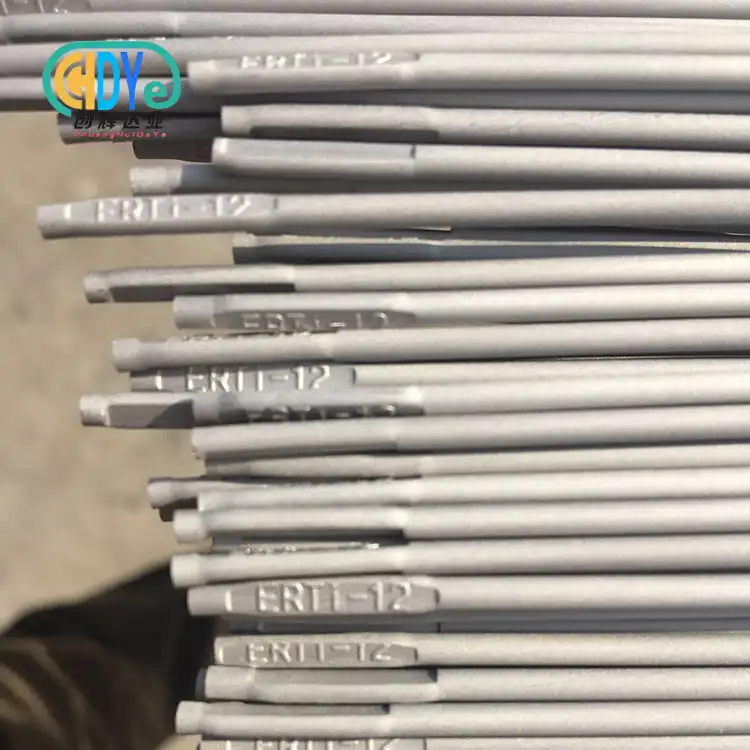
Key Industries Using Titanium Welding Wire
The industrial landscape for titanium welding applications spans multiple sectors where material performance can't be harmed. Procurement experts can find the best supplier partnerships and technical standards that meet their business needs when they understand these markets.
Aerospace and Defense Manufacturing
According to a study of the industry, aerospace makers are the biggest buyers of titanium welding wire, making up about 40% of the world's demand. In this industry, the best materials are needed, especially ERTi-5 and ERTi-23, which can keep their shape in temperatures ranging from -200°C to 600°C. These welding products are used by companies that make airplane engines to put together turbine blades, compressor cases, and hydraulic systems. While making sure that the heat-affected zone keeps the base metal's wear resistance qualities, the welding process must stop alpha-case formation. For defense purposes, it can be used to make missile parts, satellite frames, and the frames of naval ships. Reducing weight has a direct effect on task performance and operating efficiency.
When compared to steel alternatives, titanium welding technology helps commercial flight a lot because it lets makers make planes that are 15-20% lighter while still being stronger. This weight decrease means that a lot less fuel is used, and the operating range is increased.
Medical Device and Biomedical Applications
The medical industry's adoption of titanium welding technology stems from the material's exceptional biocompatibility and non-magnetic properties. Surgical tool and implant makers need ERTi-2 and ERTi-4 types for welding components that will come into close contact with body fluids or tissue. Making orthopedic implants is a growing market area where the accuracy of welding has a direct effect on how well patients do. For hip replacement parts, dental implants, and spine fusion hardware to stay strong over time, they need to be welded in a way that keeps the material's osseointegration qualities. The area where the welding is happening must stay completely clean so that the safe surface properties that are needed for successful insertion are maintained. When making cardiovascular devices, like pacemaker housings, stents, and surgical tools, titanium welding is used. For these uses, the welds need to go deep enough and have smooth surfaces so that they don't irritate tissues and the devices last a long time inside the body.
Chemical and Petrochemical Processing Industries
Chemical processing facilities rely heavily on titanium welding solutions for constructing corrosion-resistant equipment that handles harsh media. To make heat exchangers, put together reactor vessels, and install pipe systems, you need welding materials that can keep their protective oxide layer even at high temperatures and in acidic environments. Chlor-alkali plants use ERTi-7 welding wire with palladium added to make it more resistant to rust in wet chlorine conditions. The welding method has to keep the material from stress corrosion breaking and make sure the joints don't leak. They also have to be able to handle changes in temperature and chemicals for decades of use. Desalination plants are a new market where titanium welding can be used to make parts that can withstand seawater. Titanium naturally resists pitting and crevice corrosion caused by chloride, which is good for evaporator tubes, condenser units, and salt handling systems.
Titanium Welding Wire Properties and Welding Techniques Essential for Industrial Use
Understanding the metallurgical characteristics of titanium welding materials enables engineers to improve their welding techniques and get reliable results in a wide range of situations. Because the material is volatile, it needs to be handled and welded in certain ways to keep it from getting contaminated and to make sure the joint qualities are at their best.
Superior Mechanical and Chemical Properties
Titanium welding wire is different from other welding materials because it has special properties. The material stays very flexible and doesn't wear out easily, even after being heated and cooled many times. This means it can be used in situations where it will be repeatedly stressed or vibrated. Titanium naturally forms a protective oxide layer that fixes itself when it gets broken, making it more resistant to corrosion than most metals. This passive film stays stable over a pH range of 3 to 12 and is very resistant to chloride-induced corrosion processes that break down stainless steel quickly. The fact that it isn't magnetic is very important for making electronics and for medical uses, where electromagnetic radiation needs to be kept to a minimum. Biocompatibility testing shows that titanium can be implanted and left in place for a long time without causing tissue reactions or metal ions to leak out.
Welding Process Optimization and Grade Selection
To successfully weld titanium, the temperature and air pressure must be carefully controlled. Gas Tungsten Arc Welding (GTAW/TIG) is still the best way to do important jobs. It uses high-purity argon as a cover and follows gas protection to keep the atmosphere clean during the cooling phase. Choosing the right grade depends on the needs of the application. For example, widely pure grades (Gr1, Gr2) offer the best corrosion protection for chemical processing, while alloy grades (Gr5, Gr23) make structural parts stronger. ERTi-12 has molybdenum and nickel added to it to make it more resistant to reducing acids and to improve its mechanical qualities at high temperatures. Optimizing welding parameters means controlling the amount of heat used to stop grain growth and make sure that all the metal is melted and penetrated. Interpass temperature boundaries should stay 150 °C below to keep hydrogen from absorbing and keep the best microstructural properties in the weld zone.
How to Choose the Right Titanium Welding Wire for Your Industry Needs
When choosing the right titanium welding wire types, you need to think carefully about the conditions of use, government rules, and the expected long-term performance. When buying things, people have to weigh the prices of materials against the benefits to operations, and they also have to make sure that the suppliers can meet the production needs.
Application-Specific Grade Requirements
Different business uses need different kinds of titanium that work best in those conditions. ERTi-5 (Ti-6Al-4V) is often used in aerospace because it has a high strength-to-weight ratio and has been used successfully in high-stress parts in the past. The alpha-beta microstructure gives the best protection against fatigue and keeps its mechanical qualities even when the temperature changes. ERTi-2 (commercially pure Grade 2) is often needed in chemical processes because it is the most resistant to rust in oxidizing conditions. The material can be shaped easily, so it can be used in complicated shapes while still meeting the high standards for weld quality needed for pressure vessel uses. ERTi-4 extra low interstitial (ELI) formulas help make medical devices by reducing the amount of impurities and making sure that the materials are always biocompatible. The lower amount of oxygen and nitrogen makes the material more flexible and resistant to wear, which are important properties for implant uses.
Supplier Evaluation and Quality Assurance
When looking for trusted suppliers, you need to look at their manufacturing skills, quality control methods, and expert help resources. For basic quality assurance, ISO 9001:2015 certification is enough. For aerospace-specific quality management systems that can meet strict traceability standards, AS9100 approval is what you need. For each production lot, material test records (MTRs) must list the chemical make-up, mechanical qualities, and size ranges that are acceptable. Traceability paperwork should keep track of materials from where they are sourced as raw materials to where they are delivered as finished goods. This way, problems with quality or regulatory questions can be quickly fixed. When making new applications or fixing problems with welding methods, technical help skills become very important. Suppliers who give metallurgical knowledge, develop welding parameters, and provide on-site help are worth a lot more than just providing materials.
Procurement Strategies for Titanium Welding Wire in B2B Settings
To make good purchasing decisions for titanium welding materials, you need to know about global supply lines, how markets work, and how to handle your inventory. Strategic choices about where to get things affect both the short-term costs of a project and its long-term ability to run.
Global Supply Chain Considerations
Titanium sponges are mostly made in a few areas, which makes the supply chain dependent on those areas, which affects prices and availability. Chinese manufacturers, like those in Baoji's "Titanium Capital" region, gain from processing equipment that is both cost-effective and able to handle multiple production tasks at once. When planning lead times, you need to think about when to get raw materials, when to start production, and how to ship things across borders. Standard grades usually have delivery times of 4 to 6 weeks, while custom formulas or handling that needs to be done in a special way may take 8 to 12 weeks. Carrying costs and stock-out risks should be weighed in inventory management strategies, especially for important uses where production delays have a big effect on the economy. Strategic relationships with providers that offer vendor-managed inventory programs can help you get the most out of your working capital and make sure you always have the materials you need.
Cost Optimization and Value Engineering
Titanium welding wire prices are based on the cost of raw materials, the difficulty of handling, and changes in market demand. A lot of the time, bulk buying deals lower costs by 10 to 15 percent while keeping prices stable so that you can plan your budget. Grade optimization is a way to find value engineering possibilities. Materials that are a little more expensive may work better and last longer. When looking at different types of materials, the total cost of ownership study should include how much they cost to work on, how often they need to be fixed, and how much they cost to repair. Custom diameter standards and package layouts can improve the efficiency of welding and lower waste. For automated welding systems, straight lengths, precision-wound coils, and small-diameter choices often make the higher prices worth it by increasing output and lowering the cost of handling.
Conclusion
The industries utilizing titanium welding wire most extensively span aerospace, medical devices, chemical processing, marine engineering, and high-performance automotive sectors. These applications demand materials capable of withstanding extreme environments while maintaining structural integrity and corrosion resistance. Successful implementation requires understanding grade-specific properties, optimizing welding procedures, and establishing relationships with qualified suppliers offering comprehensive technical support and quality assurance capabilities.
FAQ
Q: What diameter ranges are available for titanium welding wire?
A: Standard diameters run from 0.4 mm to 6 mm, which makes them suitable for both heavy structure work and precise welding. For automatic welding systems and complicated shapes, smaller diameters work best. For structural uses, bigger diameters offer higher deposition rates. Specialized makers can make diameters that are just right for your purpose.
Q: How does titanium welding wire differ from stainless steel alternatives?
A: Titanium welding wire has better strength-to-weight ratios, doesn't rust, and is biocompatible, which are not found in stainless steel options. To keep the material from getting contaminated by air during welding, it needs to be protected with inert gas. Stainless steel, on the other hand, doesn't need as much protection. Titanium keeps its mechanical qualities at higher temperatures and doesn't crack when exposed to chloride stress rust.
Q: Which welding processes work best with titanium welding wire?
A: Gas Tungsten Arc Welding (GTAW/TIG) gives you the best control for important jobs that need exact heat input and safety from the air. Gas Metal Arc Welding (GMAW/MIG) is more productive for structural work, while laser welding lets you join things precisely with few heat-affected areas. All of the processes need protective gases that are very pure and preparation steps that don't contain any contaminants.
Partner with Chuanghui Daye for Premium Titanium Welding Wire Solutions
Shaanxi Chuanghui Daye Metal Material Co., Ltd. stands as your trusted titanium welding wire manufacturer, combining over 30 years of rare metal expertise with state-of-the-art production facilities in China's renowned "Titanium Capital." Our comprehensive grade selection includes Gr1-Gr23 and ERTi series materials that meet ASTM B863 and AWS A5.16 standards. Our wires come in diameters from 0.4mm to 6mm and can have either a pickled or bright surface finish. Contact our technical team at info@chdymetal.com to discuss your specific welding needs and find out how our ISO 9001:2015-certified goods can help you improve your production processes while keeping quality high and prices low.
References
1. Boyer, R.R. "An Overview on the Use of Titanium in the Aerospace Industry." Materials Science and Engineering: A, Vol. 213, No. 1-2, 1996, pp. 103-114.
2. Donachie, Matthew J. "Titanium: A Technical Guide, 2nd Edition." ASM International, Materials Park, OH, 2000.
3. Lutjering, Gerd, and James C. Williams. "Titanium: Engineering Materials and Processes." Springer-Verlag, Berlin, 2007.
4. Schutz, R.W., and D.E. Thomas. "Corrosion of Titanium and Titanium Alloys." ASM Handbook Volume 13: Corrosion, ASM International, 1987, pp. 669-706.
5. Welding Handbook Committee. "Welding Handbook: Materials and Applications, Part 2, Volume 4." American Welding Society, Miami, FL, 1998.
6. Zhang, L.C., and L.Y. Chen. "A Review on Biomedical Titanium Alloys: Recent Progress and Perspective." Advanced Engineering Materials, Vol. 21, No. 4, 2019.
Learn about our latest products and discounts through SMS or email