- English
- French
- German
- Portuguese
- Spanish
- Russian
- Japanese
- Korean
- Arabic
- Greek
- German
- Turkish
- Italian
- Danish
- Romanian
- Indonesian
- Czech
- Afrikaans
- Swedish
- Polish
- Basque
- Catalan
- Esperanto
- Hindi
- Lao
- Albanian
- Amharic
- Armenian
- Azerbaijani
- Belarusian
- Bengali
- Bosnian
- Bulgarian
- Cebuano
- Chichewa
- Corsican
- Croatian
- Dutch
- Estonian
- Filipino
- Finnish
- Frisian
- Galician
- Georgian
- Gujarati
- Haitian
- Hausa
- Hawaiian
- Hebrew
- Hmong
- Hungarian
- Icelandic
- Igbo
- Javanese
- Kannada
- Kazakh
- Khmer
- Kurdish
- Kyrgyz
- Latin
- Latvian
- Lithuanian
- Luxembou..
- Macedonian
- Malagasy
- Malay
- Malayalam
- Maltese
- Maori
- Marathi
- Mongolian
- Burmese
- Nepali
- Norwegian
- Pashto
- Persian
- Punjabi
- Serbian
- Sesotho
- Sinhala
- Slovak
- Slovenian
- Somali
- Samoan
- Scots Gaelic
- Shona
- Sindhi
- Sundanese
- Swahili
- Tajik
- Tamil
- Telugu
- Thai
- Ukrainian
- Urdu
- Uzbek
- Vietnamese
- Welsh
- Xhosa
- Yiddish
- Yoruba
- Zulu
Titanium Alloy Tube for Architectural and Decorative Applications
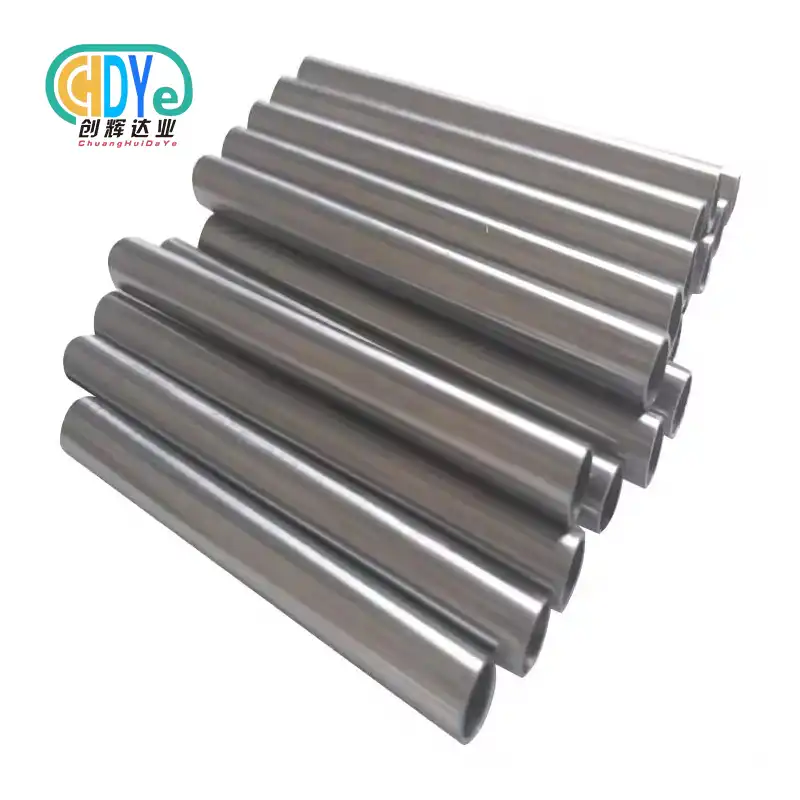
Titanium alloy tubes are a game-changer for modern builders and designers looking for materials that strike a balance between beauty and strength. These tubular goods combine great mechanical qualities with high-end looks to meet the two needs of modern construction: buildings need to be able to survive years of external stress while still looking great. Unlike other building materials that don't look good or perform well, engineered titanium alloy tubes don't rust, are lighter, and can be designed in various ways that change the artistic possibilities for facades, fences, and structural frames.
Understanding Titanium Alloy Tubes in Architecture and Decoration
Titanium alloy tubes are basically different from commercially pure titanium because they contain alloying elements in a planned way. We make tubes from grades like Gr1, Gr2, Gr7, Gr9, and Gr12 at Shaanxi Chuanghui Daye Metal Material Co., Ltd. Each grade is designed to meet specific performance profiles for architecture. Grade 2 is very easy to shape and has a modest level of strength, making it particularly suitable for decorative uses. Grade 9 (Ti-3Al-2.5V), on the other hand, has better tensile qualities that reach 620 MPa, making it perfect for structural elements that need to hold weight.
Chemical Composition and Performance Relationships
The alloying elements have a direct effect on how long something will last in a building setting. When 3 to 6 percent aluminum is added, the strength-to-weight ratio goes up by 40 per cent compared to pure types, and vanadium makes the steel more stable at high temperatures. Our Grade 7 has small amounts of palladium (0.12-0.25%) in it, which forms passive oxide layers that protect against chloride attack in coastal installations. This is critical for seaside projects because stainless steel starts to pit after 5 to 7 years.
Material Comparison for Architectural Selection
There are clear benefits to using titanium alloy tubes over other choices. Titanium weighs 4.5 g/cm³, while stainless steel 316L weighs 8 g/cm³. This means that structural loads are 44% lower, and support systems can be made lighter. Protective coats need to be renewed every three to five years on carbon steel, but the titanium alloy tube's native oxide layer regenerates itself, so there is no need for maintenance cycles. Aluminium alloys are the same weight as titanium but only have 60% of its tensile strength. This means they can't be used in high-stress building parts like cantilevered awnings or tension cable systems.
Types and Grades of Titanium Alloy Tubes for Decorative Applications
To choose the right grades, you have to balance the technical needs with the project's price. We make titanium alloy tubes that meet ASTM B338 (welded) and ASTM B861 (seamless) standards. The tubes' outside diameter (OD) ranges from 10 to 300 mm, their wall thickness from 0.5 to 10 mm, and their lengths can go up to 18,000 mm to meet a wide range of building needs.
Grade-Specific Architectural Applications
Because they don't have many alloying elements, Grade 1 and Grade 2 tubes work well for decorative fences, screens, and internal features that need to be moderately strong. Because they are so good at cold-forming, they can be used to make spiral stairs, curved mullions, and art pieces without cracking during the manufacturing process. Grade 9 is suitable for curtain wall frames and structural glass supports because it has a yield strength of 485 MPa and can still be welded for on-site assembly. With the addition of molybdenum and nickel, Grade 12 can withstand harsh industrial environments, making it a good choice for buildings near chemical processing zones or wastewater treatment plants.
Performance Trade-offs and Cost Considerations
Material choice has a big effect on lifetime costs. Grade 9 costs about 30% more per kilogram than Grade 2, but because it is stronger, it can have thinner walls, which cuts the volume of the material by 25%, and it doesn't need to be reinforced with stainless steel backing. Compared to treated steel systems, corrosion-free systems save 40 to 60 per cent on total purchase costs over 30 years of service. Architects who use titanium alloy tubes for high-profile projects say that the extra cost of the material only makes up 3–5 per cent of the total cost of building, but it pays for itself many times over in reduced upkeep and longer life.
Manufacturing and Quality Considerations for Architectural Titanium Alloy Tubes
Precision casting and cold-working are used in Chuanghui Daye's production process to make sure that the dimensions are always the same, which is important for building uses. After rotary drilling and cold pilgering, seamless titanium alloy tubes get wall thickness limits of ±0.05 mm, which lets them fit up perfectly during installation. Welded tubes use TIG (Tungsten Inert Gas) fusion with argon protection to make join gaps that are as strong as the parent metal after 650°C stress-relief annealing.
Quality Assurance and Certification Standards
As required by our ISO 9001:2015 certification, each output batch goes through several checks. Optical emission spectrometry study of the alloy's chemical composition shows that the concentrations of its elements are within ASTM guidelines. Mechanical tests record tensile strength, yield strength, and elongation numbers. For Grade 2, the results usually show tensile strength of 345 MPa, yield strength of 275 MPa, and elongation of 20%. Non-destructive eddy current testing finds flaws on the surface that are more than 0.5 mm deep, and ultrasound checking finds flaws inside seamless tubes meant for high-pressure uses like heat exchanger coils.
Customisation to Meet Architectural Needs
We can treat surfaces in ways that match the goals of the designers. Annealed finishes have natural silver-grey tones and a matte texture, while mechanical cleaning makes surfaces reflect light like a mirror (Ra < 0.2 μm) for modern looks. Electrochemical anodising creates interference colours like gold, blue, and purple by controlling the thickness of the oxide layer (50–150 nm) without using dyes or coats. This makes sure that the colours are UV-stable and won't fade even after decades of being in the sun. Customising the dimensions means laser-cutting to lengths set by architects (within a range of ±1 mm) and precise bending with radii as small as 3× the tube diameter, which can fit complex geometric shapes in building envelopes.
Practical Applications of Titanium Alloy Tubes in Architecture and Decoration
Titanium alloy tubes can be used in many different types of architecture. When used in structures, tubes are used to make space frame nodes and truss members. Their 160 GPa elastic stiffness gives them the same strength as steel but half the weight. Titanium's fatigue resistance lets it survive millions of bending cycles without cracking. It can be used for decorative purposes in a variety of ways, from railing filler panels to kinetic wall elements that move in response to wind or light.
Sustainable Building Integration
The material meets the environmental standards for LEED and BREEAM because it can be recycled and lasts a long time. Titanium alloy tubes don't need any surface treatments with volatile organic chemicals, so there are no worries about off-gassing in public areas. It can be used for more than 100 years, which lowers the amount of carbon that is built into a building over its lifetime. At the end of its useful life, it can be recycled (95% of the time), closing the material loop. Titanium alloy tubes are used in geothermal heat exchanger loops in energy-efficient buildings because they don't rust and keep the thermal transfer efficiency going forever, unlike copper or stainless steel systems that scale or break down.
Case Study Insights
Landmark projects show that they work well. A Florida seaside cultural centre chose Grade 7 tubes for outdoor rails and sunshades. After 12 years of being exposed to salty spray, tests done by a third party showed no measurable corrosion and only light surface discolouration that could be fixed with light abrasive cleaning. Grade 9 tubes were used as structural beams in a Chicago transit stop to support a glass canopy. This saved 35% of the weight of similar steel sections, which in turn reduced base loads and cut building costs by $180,000. Anodised titanium alloy tubes are used as sculptures in museum pieces because they keep their colour even after being exposed to UV light for a long time. This is in contrast to powder-coated aluminum, which needs to be refinished every 8 years.
How to Procure Titanium Alloy Tubes for Your Architectural Projects?
Evaluating suppliers is the first step to successful buying. Check the factory's ability to make things by having facility audits or third-party evaluations done. Look at the melting equipment (electron beam or vacuum arc furnaces; make sure of low interstitial content), the processing equipment (multi-stand cold pilger mills show ability for tight tolerances), and the testing labs (in-house spectrometers and mechanical test frames show strict quality control). Ask for certifications that include material test records (MTRs) that list the chemistry and mechanical qualities of each production lot, as well as paperwork that shows how finished titanium alloy tubes can be tracked back to the ingot source.
Pricing Structures and Economic Analysis
Titanium alloy tube prices depend on the grade's level of difficulty, the size requirements, and the number of orders. For orders over 500 kg, the base price for Grade 2 seamless tubes (OD 50mm × WT 2mm) is usually between $45 and $65 per kilogram. Welded versions are priced 15-20% less because they are processed less intensively. Depending on the method (mechanical cleaning vs anodising), custom surface processes cost an extra $8 to $15 per kilogram. Volume discounts are applied in steps: orders over 1,000 kg get 8–12% off, and annual supply deals for 5,000 kg or more get 15–18% off plus priority ordering for production.
The total installed prices should be taken into account in the cost-benefit comparison. It costs about $12,000 for ingredients and $3,500 to make a 100-metre handrail system out of titanium alloy tubes (Grade 2, 38mm OD), but it costs $7,500 and $2,800 to make one out of 316L stainless steel. But a titanium alloy tube doesn't need to be inspected every six months, which costs $800 a year, and it doesn't need to be replaced every 15 years, which costs $18,000 in total. This saves a net of $22,100 over 30 years, or a 68% lifetime cost advantage.
Engaging Reliable Supply Partners
As part of the practical steps, samples of titanium alloy tubes (usually 300–500 mm long) are requested so that the surface quality, dimensional accuracy, and forming behaviour during mock-up production can be checked. The technical datasheets should list the minimum and maximum chemical compositions, mechanical properties, and ASTM standards that apply (B338, B337, B861, B862). If the project requirements call for third-party proof, make sure compliance is through tests in a separate lab. By working directly with manufacturers like Chuanghui Daye in Baoji's "Titanium Capital" instead of going through distributors, you can get direct engineering support, shorter lead times (4–6 weeks for standard grades vs. 8–12 weeks through distributors), and more customisation options than from stock suppliers.
Conclusion
Titanium alloy tube solutions are a smart material choice for builders and engineers who want to make designs that look good, last a long time, and work well structurally. The grades we make at Chuanghui Daye—Gr1, Gr2, Gr7, Gr9, and Gr12—meet all the needs of architecture, from decorative elements to frames that hold weight. We make it possible for building projects to last for decades while still looking good. We do this by using precise production, strict quality control under ISO 9001:2015 guidelines, and the ability to customise sizes, finishes, and treatments. Titanium alloy tube is a good investment for future-looking building projects because it doesn't rust, is strong for its weight, and doesn't need much upkeep. These benefits also create economic benefits that cover the initial costs.
FAQ
Q: What distinguishes titanium alloy tubes from commercially pure titanium in architectural contexts?
A: Aluminium, vanadium, and molybdenum are alloying elements that are added to titanium alloy tubes to improve their mechanical qualities beyond those of pure grades. The tensile strength of Grade 9 (Ti-3Al-2.5V) is 620 MPa, which is higher than Grade 2's 345 MPa. This means that buildings can have thinner walls and be lighter. Alloys also make it easier to solder and more stable at high temperatures, which is useful for things like curtain walls that are subject to thermal cycles.
Q: How does titanium corrosion resistance compare to stainless steel in outdoor installations?
A: Titanium alloy tube creates a layer of TiO₂ oxide that repairs itself naturally and can never be damaged by salt, acid rain, or industrial pollution. After 5,000 hours of accelerated salt spray tests (ASTM B117), there is no pitting, but after 720 hours of the same conditions, there is limited corrosion in 316L stainless steel. Titanium is resistant to pollutants in the air, which makes it a good material for coastal and urban areas.
Q: Can titanium tubes be customised for specific architectural design requirements?
A: Precision cutting to lengths stated (±1 mm), bending to angles as small as 3×, surface finishes ranging from matte to mirror polish, and anodising for interference colours are some of the ways that the titanium alloy tube can be customised. We can work with sizes ranging from 10 mm to 300 mm in diameter and from 0.5 mm to 10 mm thick on the walls. Our flexible production processes allow us to support both standard and custom building parts.
Partner with Chuanghui Daye for Superior Titanium Alloy Tube Solutions
If you are an architect or designer looking for a reliable titanium alloy tube source, Shaanxi Chuanghui Daye Metal Material Co., Ltd. can help you in every way. We offer ISO 9001:2015-certified tubes in grades Gr1, Gr2, Gr7, Gr9, and Gr12, made to ASTM B338, B337, B861, and B862 standards. Our staff has more than 30 years of experience in the rare metals business. Our factory-direct price, ability to customise sizes and finishes, and strict quality control make sure that the materials you use in your projects are of the highest quality and that you can count on a reliable supply. Get in touch with our technical team at info@chdymetal.com to talk about your needs, ask for samples of the material, or get full quotes that include precision-engineered titanium alloy tube solutions that fit your design vision.
References
1. American Society for Testing and Materials. (2021). Standard Specification for Seamless and Welded Titanium and Titanium Alloy Tubes for Condensers and Heat Exchangers (ASTM B338-21). West Conshohocken, PA: ASTM International.
2. Boyer, R., Welsch, G., & Collings, E.W. (2019). Materials Properties Handbook: Titanium Alloys (3rd ed.). Materials Park, OH: ASM International.
3. International Organisation for Standardisation. (2020). Titanium and Titanium Alloys—Chemical Composition and Mechanical Properties (ISO 5832-3:2020). Geneva: ISO.
4. Peters, M., Kumpfert, J., Ward, C.H., & Leyens, C. (2018). Titanium and Titanium Alloys: Fundamentals and Applications in Architecture and Engineering. Weinheim: Wiley-VCH.
5. Schutz, R.W. & Watkins, H.B. (2017). "Recent developments in titanium alloy application in architecture and construction." Journal of Materials in Civil Engineering, 29(4), 04016285.
6. Zhang, L., Chen, Y., & Wang, H. (2022). Corrosion Behaviour and Surface Treatment Technologies for Architectural Titanium Alloys. Beijing: Metallurgical Industry Press.
Learn about our latest products and discounts through SMS or email